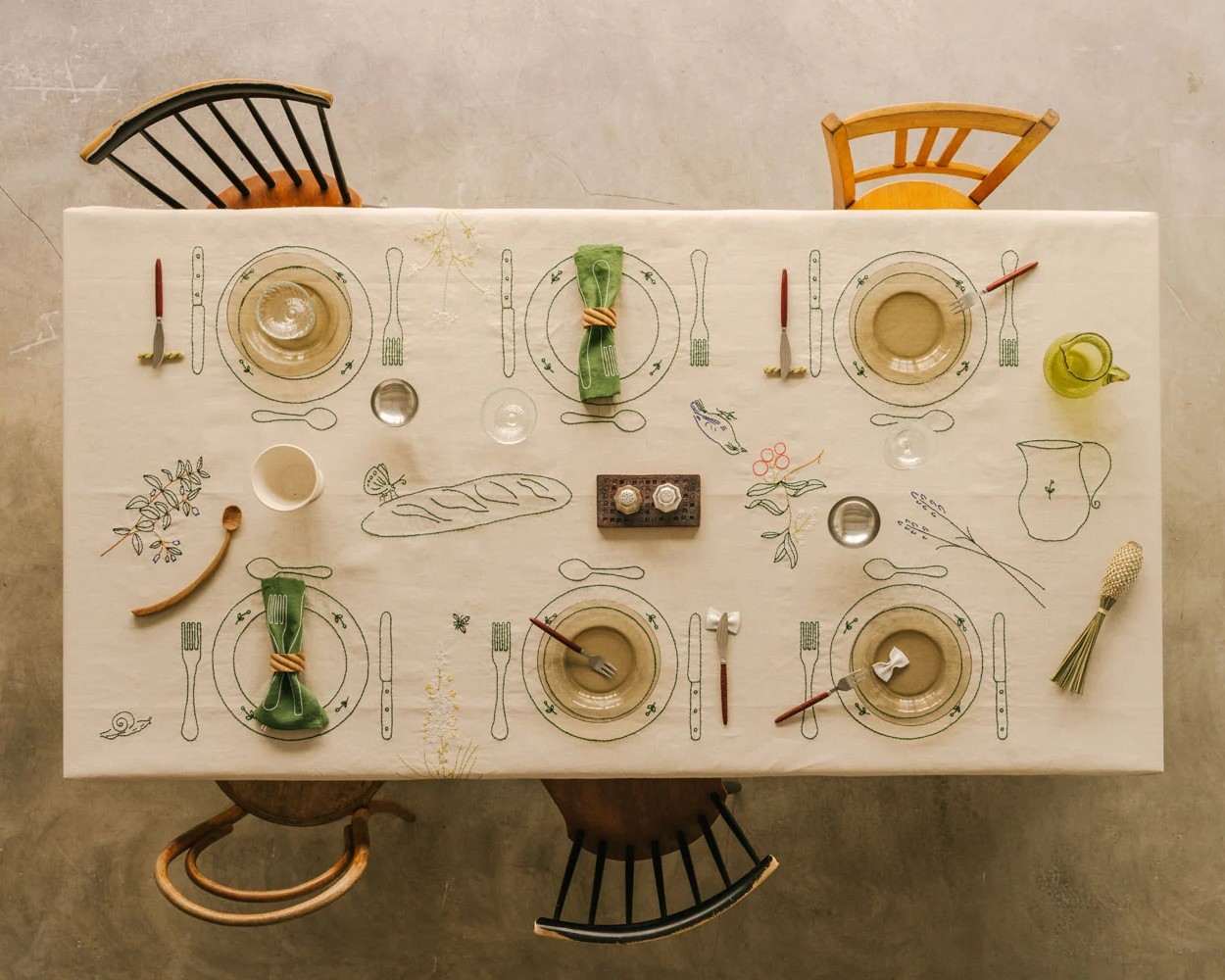
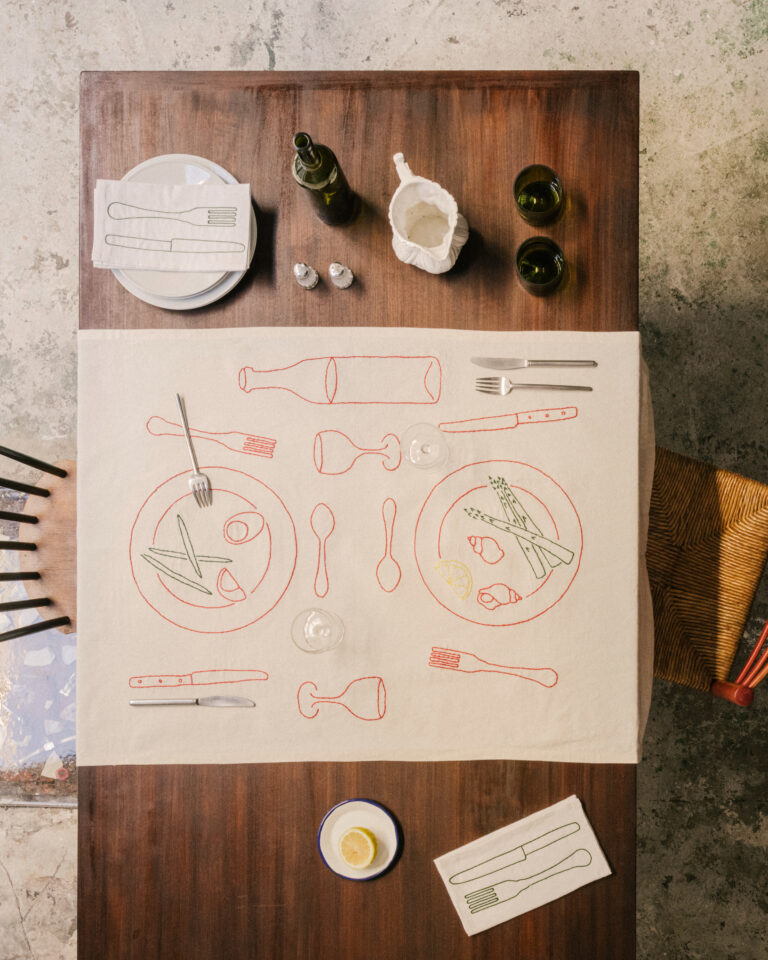
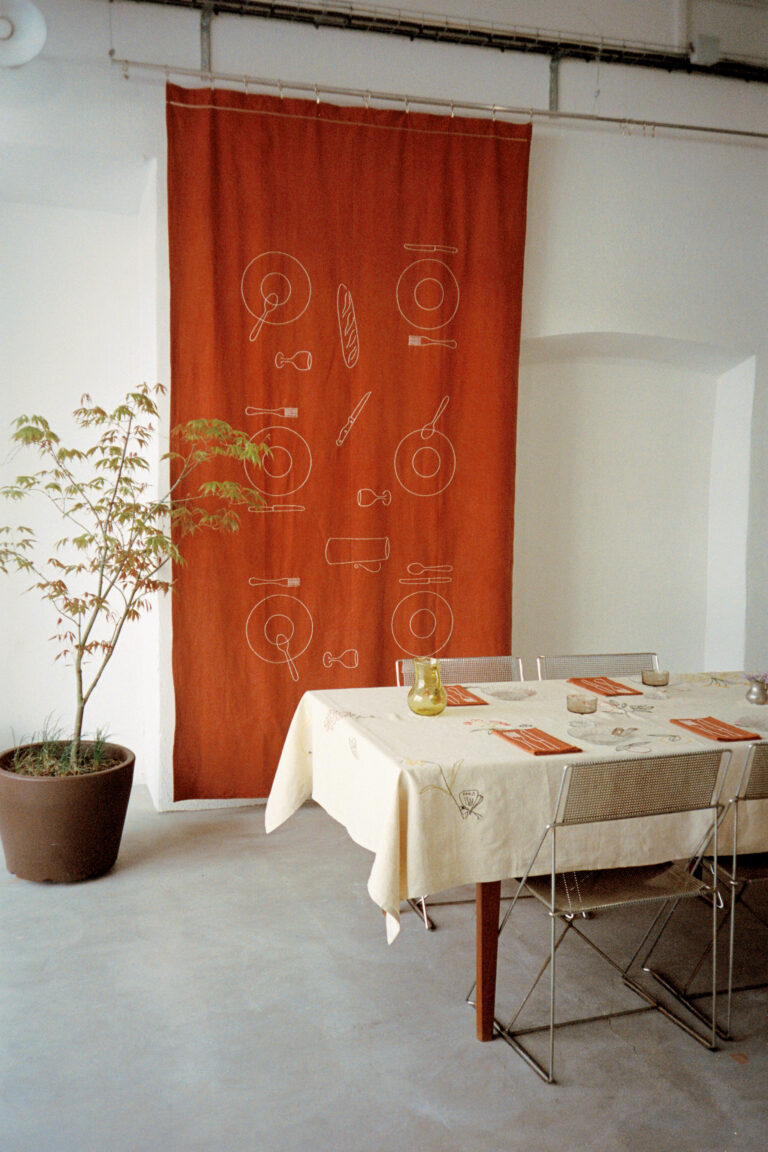
There is a particular kind of magic in watching a blank length of century-old linen become, thread by thread, a table set for a meal that never happened, a trompe-l’œil feast of plates and wine glasses so precisely stitched it seems to cast its own shadow. This is the signature of Sarah Espeute, the French artist-designer behind Oeuvres Sensibles, the Marseille studio quietly becoming one of textile design’s most poetic addresses.
 Oeuvres Sensibles
A Second Act, Stitched by Hand
Espeute’s path to embroidery was anything but linear. Born in Arles, she picked up a needle as a girl, then set it down for decades while she pursued other lives entirely, graphic design school in Paris, a stint in Riso printing, a small publishing house of her own, and a period devoted to painting. It took a single exhibition, conceived almost on a whim, to pull the needle back into her hand, and the response, by all accounts, was immediate and undeniable.
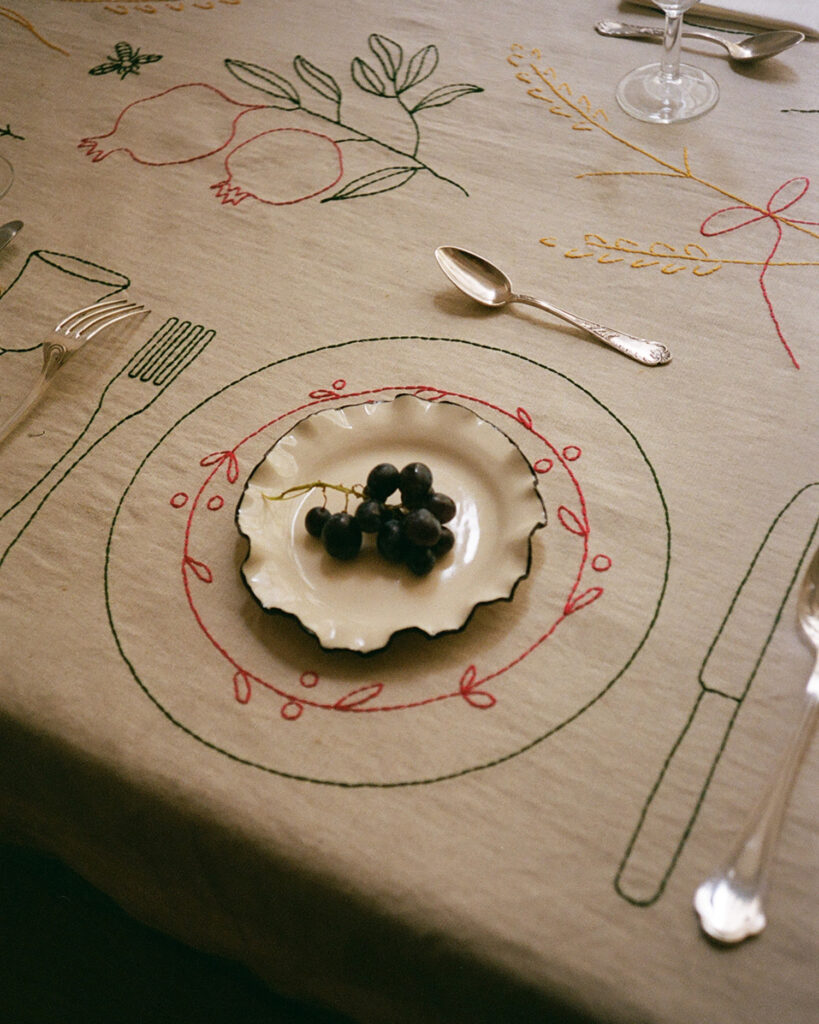
That spark became a studio. Launched in 2021, her brand and made-to-measure studio Oeuvres Sensibles takes its name from the French phrase for sensitive, or heartfelt, pieces. Working with little more than thread, a needle, and fabric, the self-taught artist builds hand-stitched plates, cutlery, and wine glasses, an entire table setting rendered convincingly in embroidery.
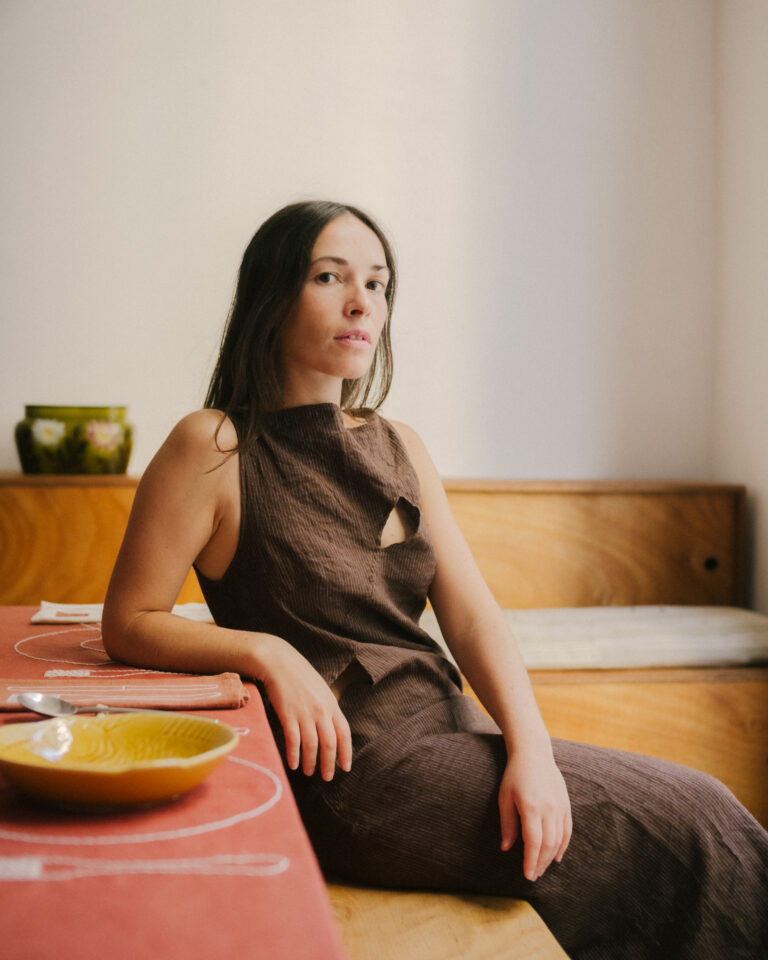 Photo by Maxime Verret
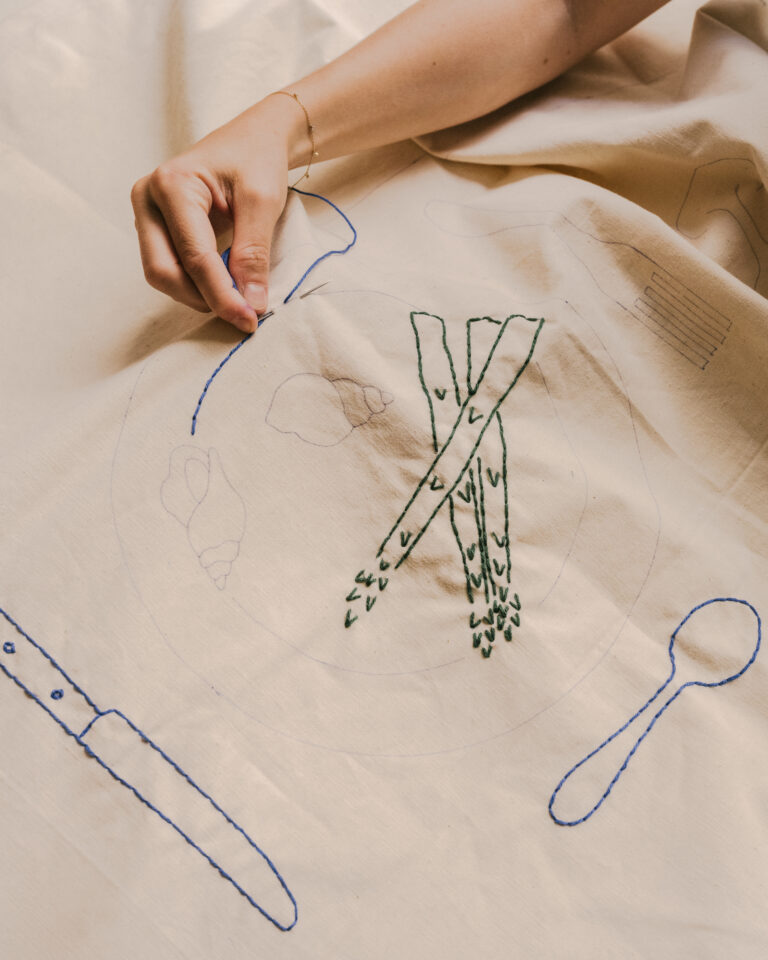 Photo by Maxime Verret
An Atelier Rooted in Place
Today, Oeuvres Sensibles operates from a light-filled home at 7 rue Villeneuve, in the heart of Marseille’s Panier district. The roughly 300-square-meter space serves double duty as workshop and public showroom, built out by hand down to the last detail. There, Espeute no longer works alone. She now leads a small team of trained embroiderers and fellow artists, who together turn out her trompe-l’œil tablecloths alongside curtains, table linens, cushions, and other pieces.
The studio’s philosophy is as much architectural as it is artistic: a house, not simply a workshop. The brand describes itself first as a creative space, a “sensitive house” designing both objects and interiors, for private clients and professionals alike. Every commission, whether a dinner-party runner or an architectural installation, is meant to carry Espeute’s own aesthetic through-line, while still answering to what the client actually wants.
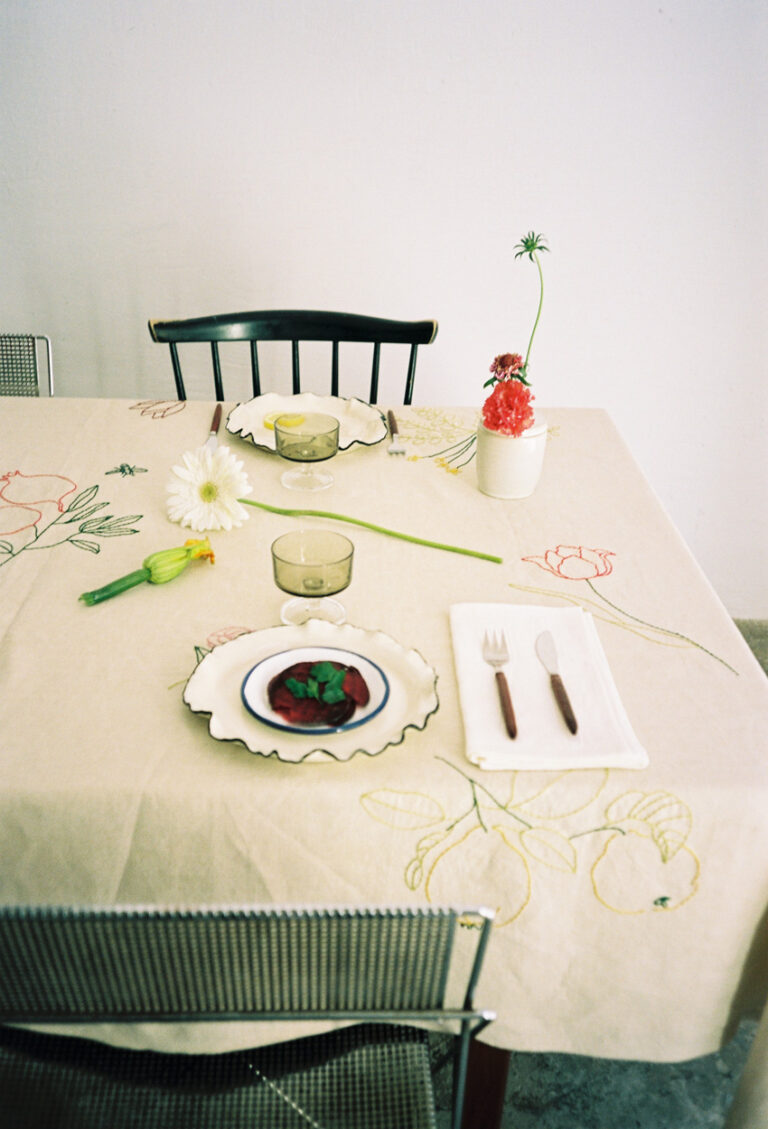 Photo by Maxime Verret
 Oeuvres Sensibles
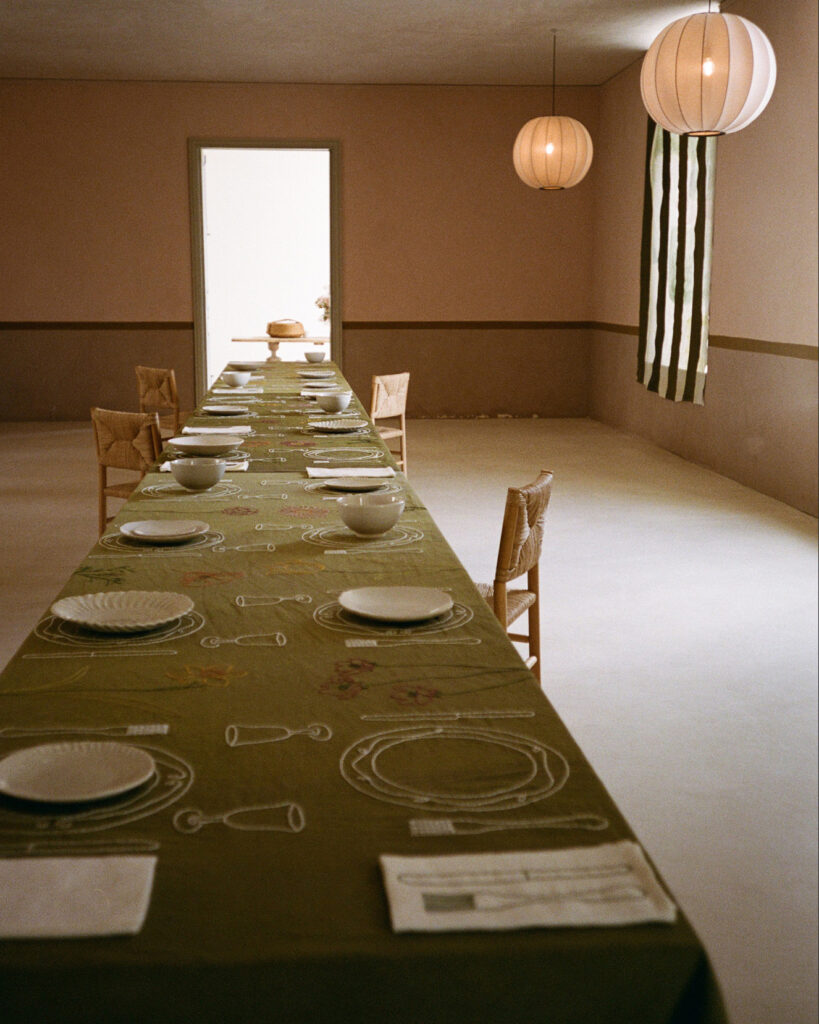
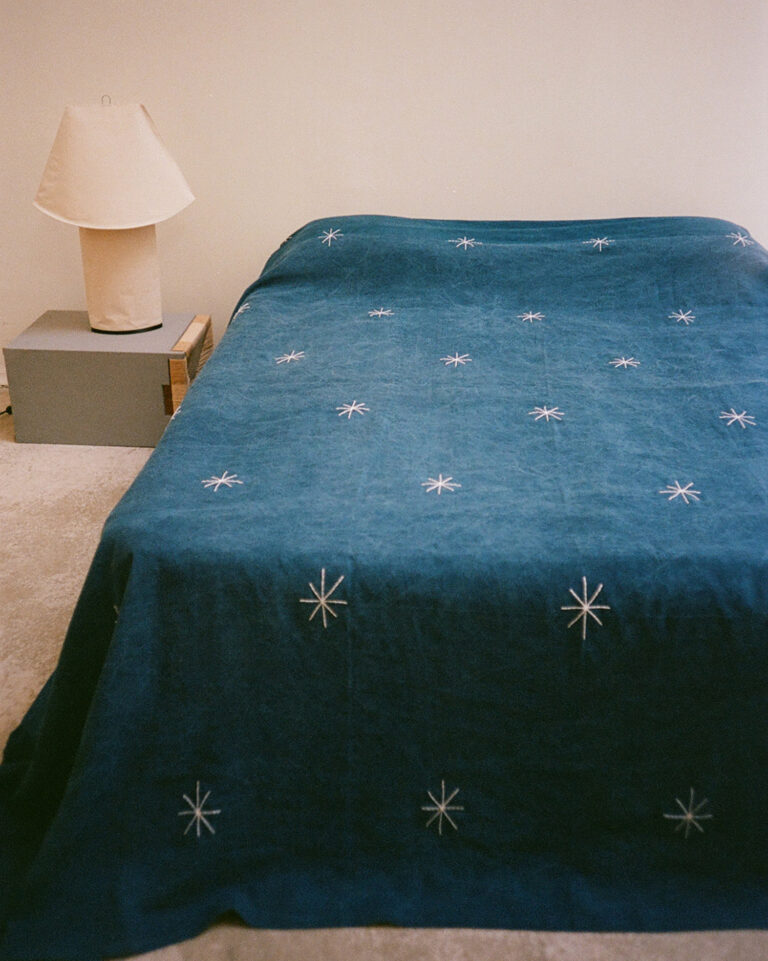
Within her own atelier, Espeute privileges a slower, more deliberate register of craft. She works with antique fabrics and fine French natural materials, folding hand embroidery, natural dyeing, and traditional weaving into pieces meant to feel less like decor and more like inheritance, bedcovers steeped in indigo, a “Sleeping Beauty” coverlet worked entirely in linen, table runners and harvest cloths embroidered by hand in hemp and cotton. Each piece is designed to outlast trend entirely, closer in spirit to a family heirloom than a seasonal object.
 Oeuvres Sensibles
Old Cloth, New Life
At the philosophical center of the brand is a quiet argument against disposability. Espeute favors natural fibers, linen, cotton, and wool, and much of what lands in her hands has already lived half a century or more, remarkably durable despite its age. In an era of fast textiles and short attention spans, she is candid about what’s been lost. “We’ve lost the emotional and lasting value textiles once held,” she has said, pointing to older traditions like the family trousseau, sewn and passed down through generations.
Her work is, in a sense, a rescue mission dressed in poetry. She sees the objects she makes as a way to spark real emotional connection, one strong enough to push back against a culture of overconsumption and disposal. Old textiles today are too often abandoned simply because people aren’t sure what to do with them, tending to prefer buying new; in her hands, they are transformed instead, given a new purpose entirely. Vintage material becomes not a compromise but the main event, cloth with a past, given a second, more deliberate future.
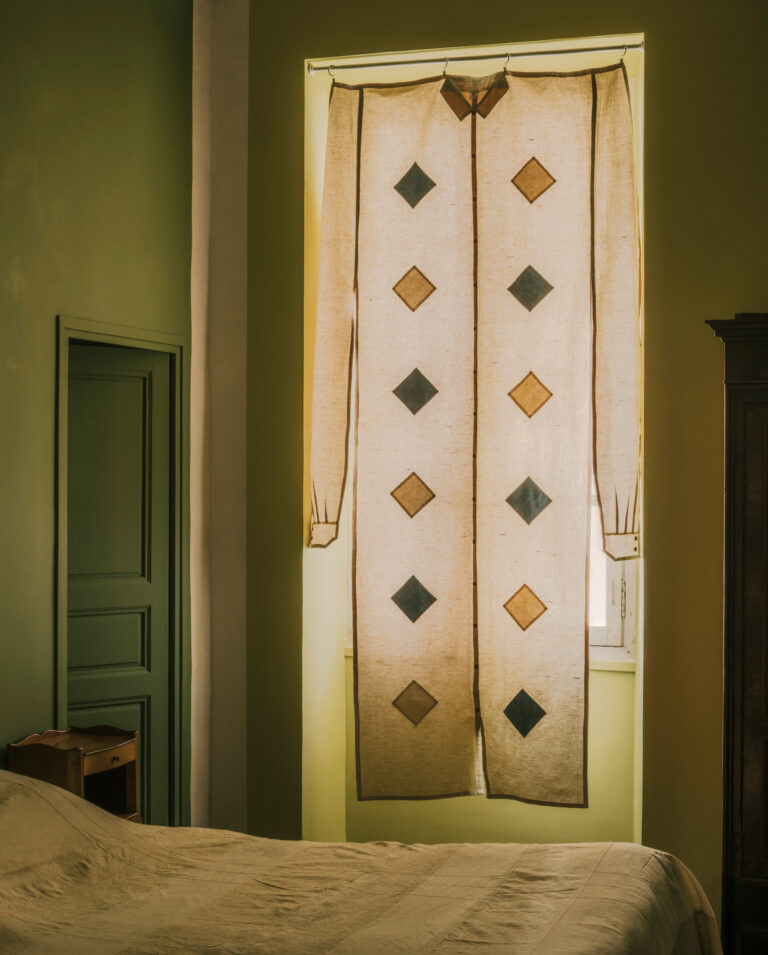 Photo by Maxime Verret
 Oeuvres Sensibles
Beyond the Table
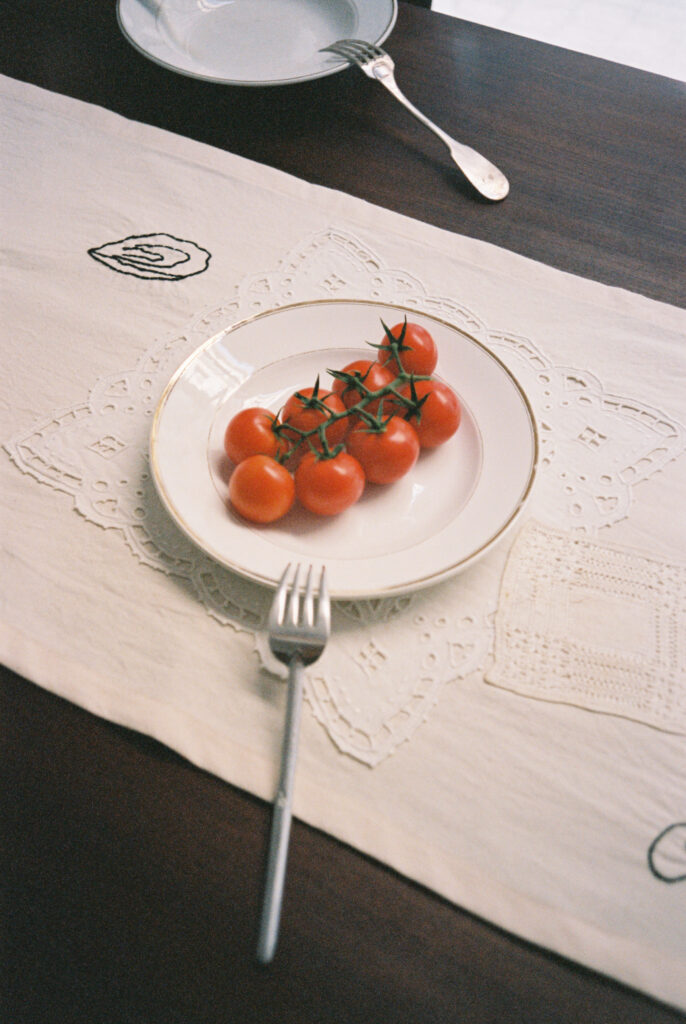
While Oeuvres Sensibles built its reputation on embroidered table settings, a series of decorative objects, tablecloths, placemats, and runners whose trompe-l’œil stitching recalls poetic and convivial scenes of shared meals, Espeute’s practice has increasingly reached beyond the domestic table into the realm of fine art and exhibition design.
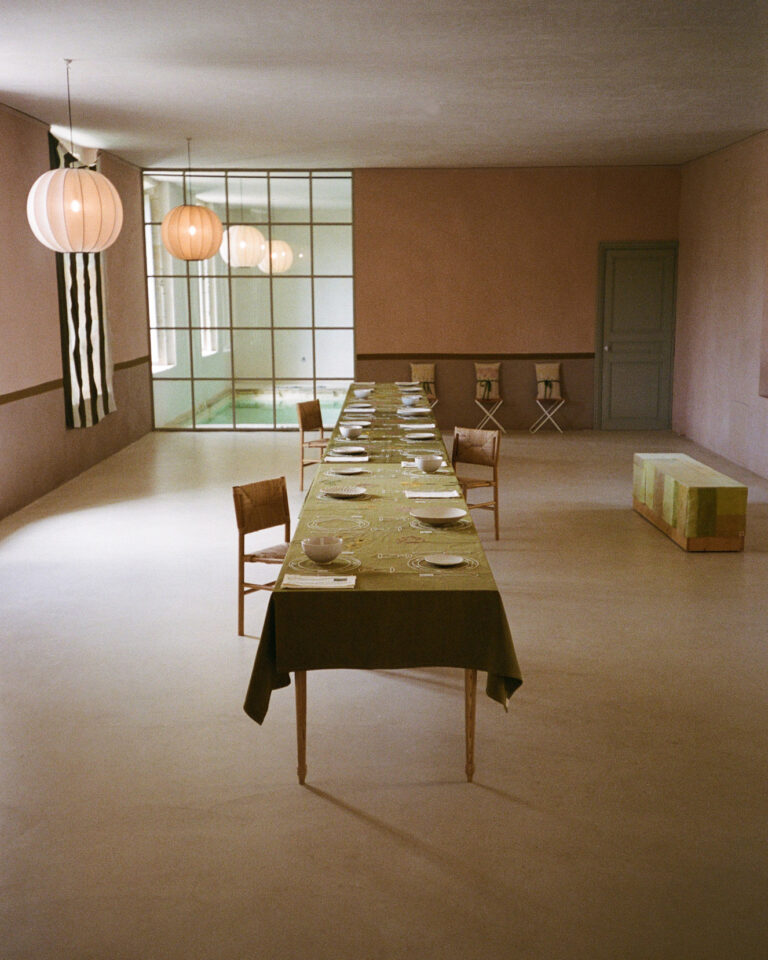
In April 2025, she was invited to create a bespoke tablecloth for Alice, Princess of Liechtenstein, exhibited at Schloss Hollenegg during the “Knit & Weave” exhibition, a rare instance of embroidery crossing fully into the language of collectible design. A year earlier, for “Se mettre au vert,” staged inside the former royal tannery of Lectoure, Espeute built an entire meditation on the color green: abstract textile landscapes and sculptural painting-furniture inspired by nature and spring, conjuring, in her words, a garden made of cloth.
More recently, the studio itself has become a gathering point for a wider creative community. Espeute has transformed her Marseille studio into a living space, halfway between a creative house and a boutique, now bringing together fifteen creators from France and beyond, united by a shared philosophy of elevating craftsmanship and textile reuse.
 Oeuvres Sensibles
The House That Sarah Built
What makes Oeuvres Sensibles resonate, beyond its exquisite handwork, is its refusal to separate art from function, or nostalgia from innovation. Espeute has described herself as belonging fully to neither camp, artist nor designer, but standing deliberately between the two, aiming for work that does more than serve a purpose: work that carries feeling, tells a story, and finds a little poetry in ordinary life.
It’s a philosophy stitched, quite literally, into every corner of her Marseille atelier, where old linen becomes new legend, and a dinner table, however imagined, is never just a dinner table.
 Oeuvres Sensibles
 Oeuvres Sensibles