Words by Avishag Elkayam
For Joseph Ellwood, furniture should never quietly disappear into a room. A chair can become a character, a lamp can feel alive, and even a scratch across a sheet of aluminium can tell the story of the hands and tools that brought an object into being.
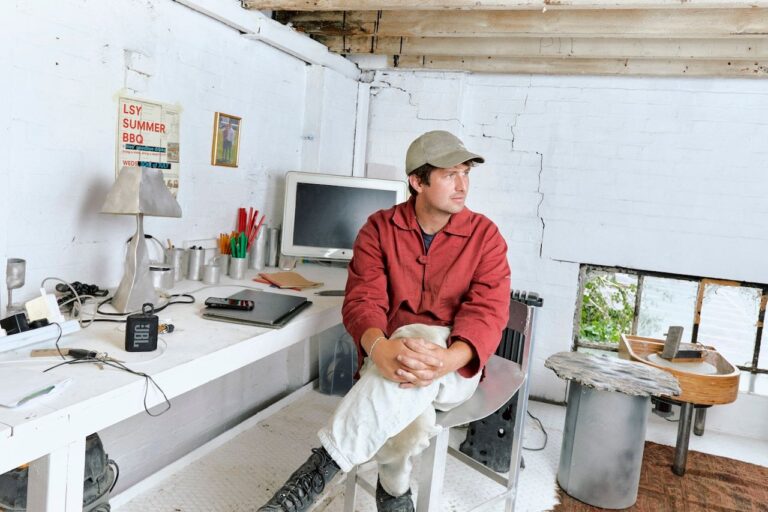
This is the world of Six Dots Design, the furniture and homeware brand Ellwood founded in 2020. Working from its East London workshop, the studio creates expressive, sculptural pieces that challenge the polished restraint often associated with contemporary interiors. Its work celebrates raw materials, unconventional silhouettes and the beauty of objects that look unmistakably human-made.
From Architecture to Object Making
Ellwood founded Six Dots after completing his architecture degree at the University of Bath. During lockdown, he worked for a cabinet designer and maker, while sharing his own furniture experiments on Instagram. Those posts led to early commissions and gradually transformed a personal exploration of design into a growing studio.
While studying for a master’s degree in architecture at the Royal College of Art, Ellwood visited Villa André Bloc. The playful, sculptural architecture inspired him to reconsider furniture as something more than a functional solution. Objects, he realised, could also carry joy, personality and soul. That shift became the foundation of Six Dots’ visual language.
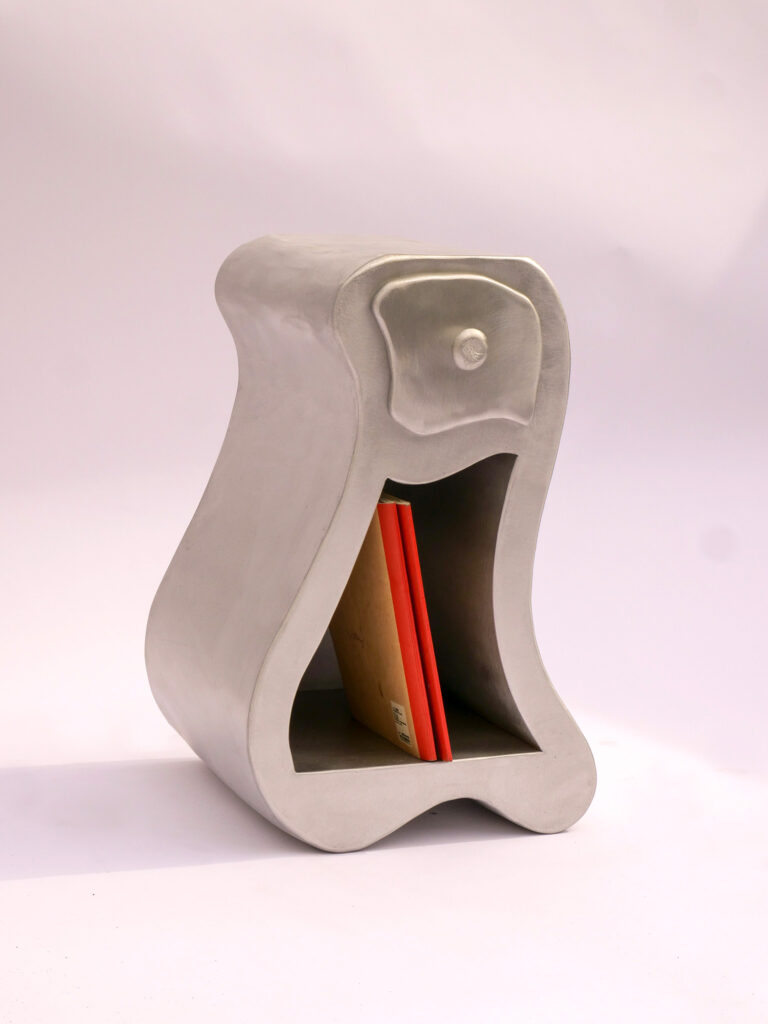
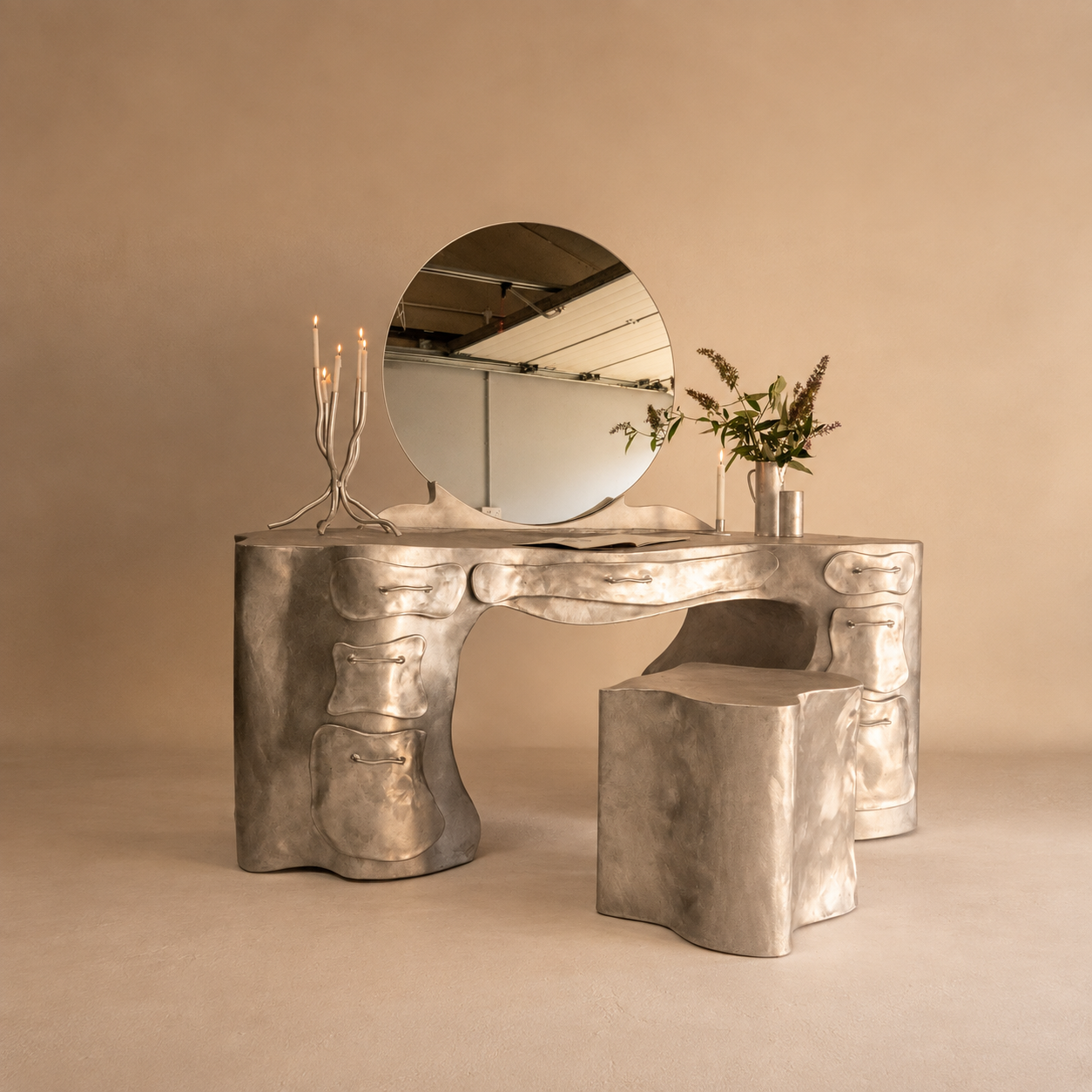
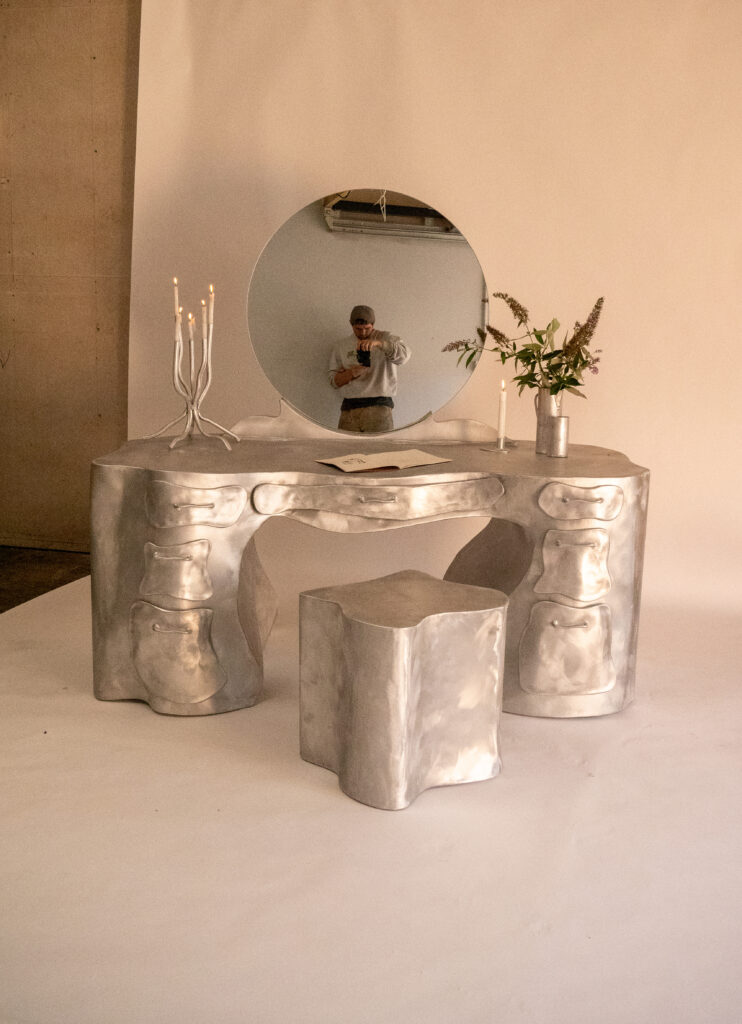
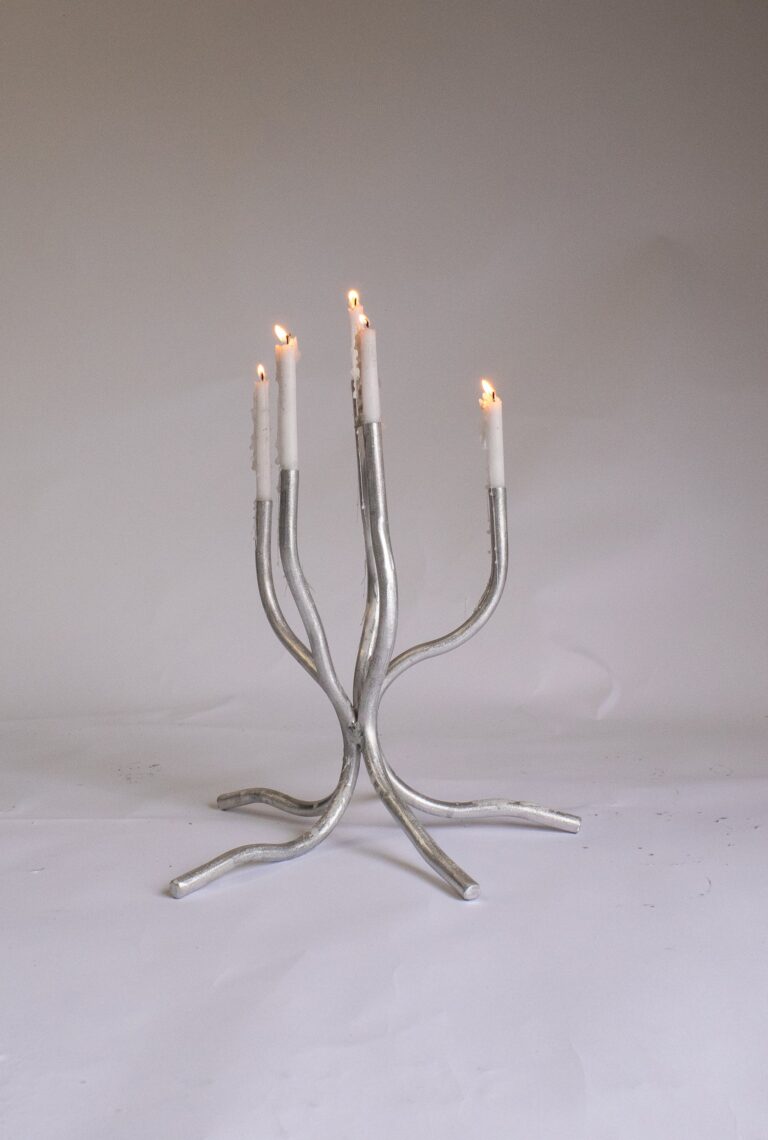
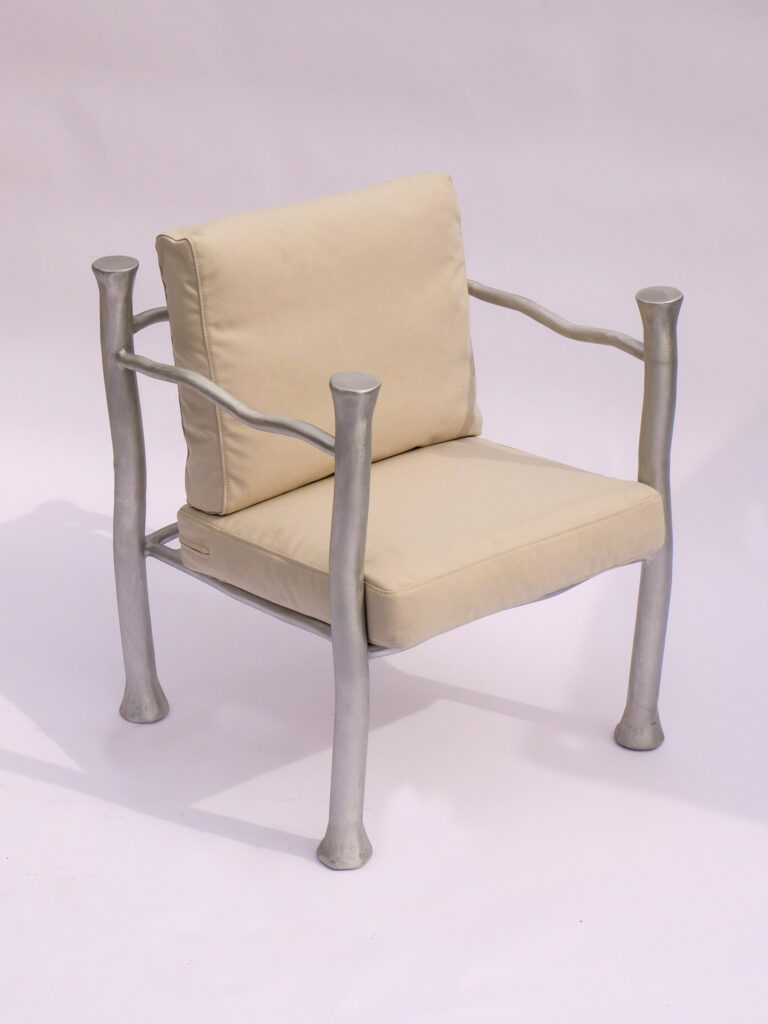
The studio introduced its first complete collection, Contemporary Vanity, in 2022. Comprising a chair, table, three-part mirror, hanging rail and modesty screen, the collection combined industrial materials with loose, almost hand-drawn forms.Its raw aluminium surfaces retained visible screws, grind marks, scratches and scuffs. Rather than hiding the construction process beneath a flawless finish, Six Dots allowed it to become part of each object’s identity.
The collection asked what it means for the furniture around us to reflect who we are. Drawing from modernist designers such as Charlotte Perriand and Jean Prouvé, Ellwood distorted familiar forms into something less rigid and more emotionally current. The result reflected a generation whose identities, tastes and ways of living are rarely fixed. Contemporary Vanity was presented across several exhibitions and received international attention. In December 2022, Wallpaper* named Six Dots one of its Future Icons of design.
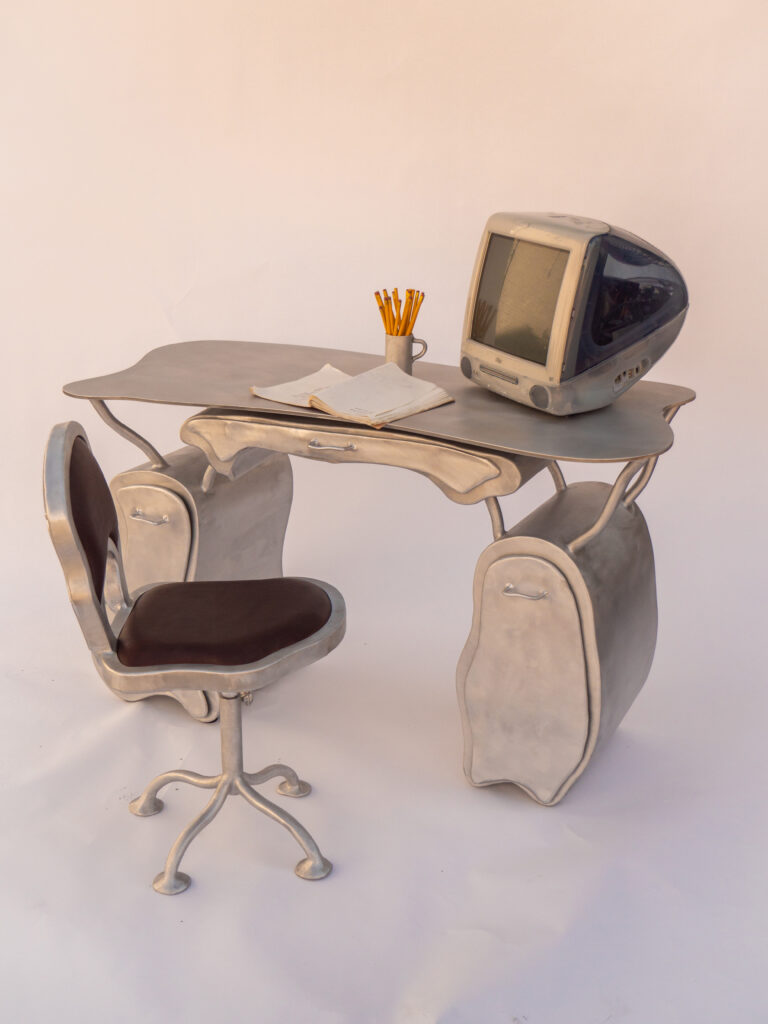
At the heart of Six Dots is a refusal to confuse perfection with quality. Solid aluminium bends into irregular silhouettes, table edges appear to ripple, and chair frames seem to wobble through space. A material that might otherwise feel cold and mechanical becomes humorous, tactile and unexpectedly intimate. For the studio, visible imperfection is more than an aesthetic choice. It challenges the idea that our homes, or the people who inhabit them, should conform to a universal standard of good taste.
This philosophy has carried Six Dots from independent commissions to collaborations with names including Rimowa, H&M, IKEA, Maison Margiela and CUPRA. The studio has also created furniture for Shoreditch Arts Club and exhibited at Collectible in Belgium, where its Handcraft Spacecraft table was selected as a Collector’s Pick. In November 2024, Six Dots presented Not in Service, a 15-piece collection introduced through a fashion show-style performance. The format felt appropriate for a studio whose furniture often appears closer to a cast of personalities than a group of passive objects.
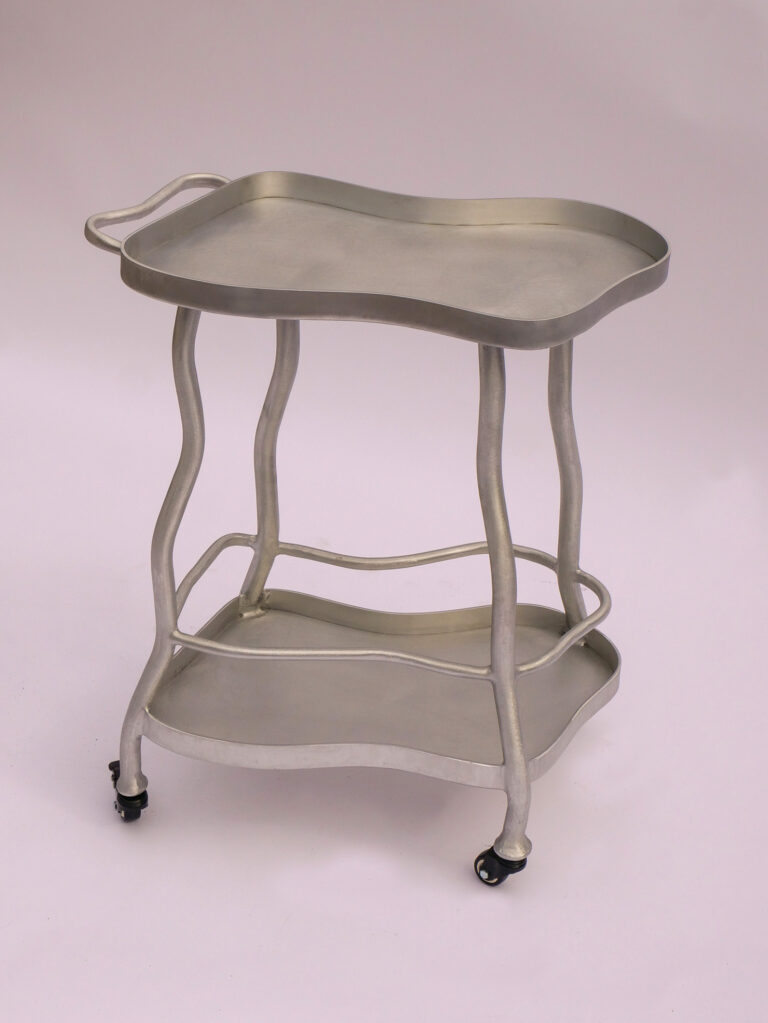
In January 2026, Six Dots received a Wallpaper* Design Award for its surreal Office Chair. Handmade from raw aluminium, the height-adjustable chair combines a flowing, sculptural frame with customisable upholstery, transforming one of the most conventional objects in contemporary life into something distinctly personal.
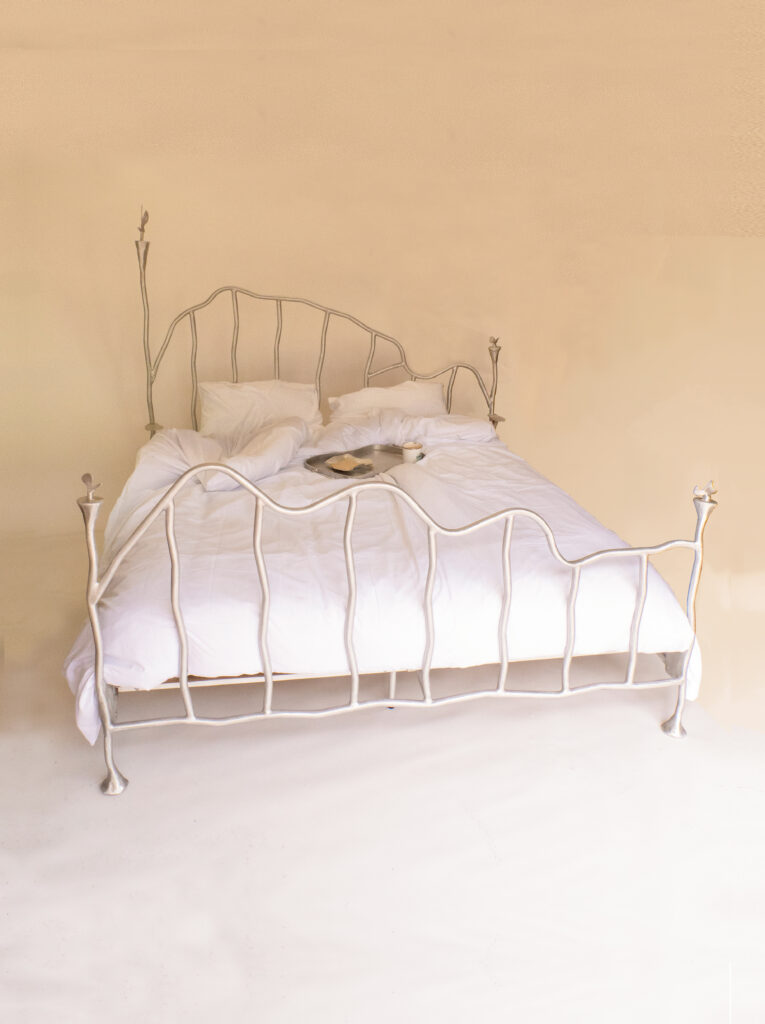
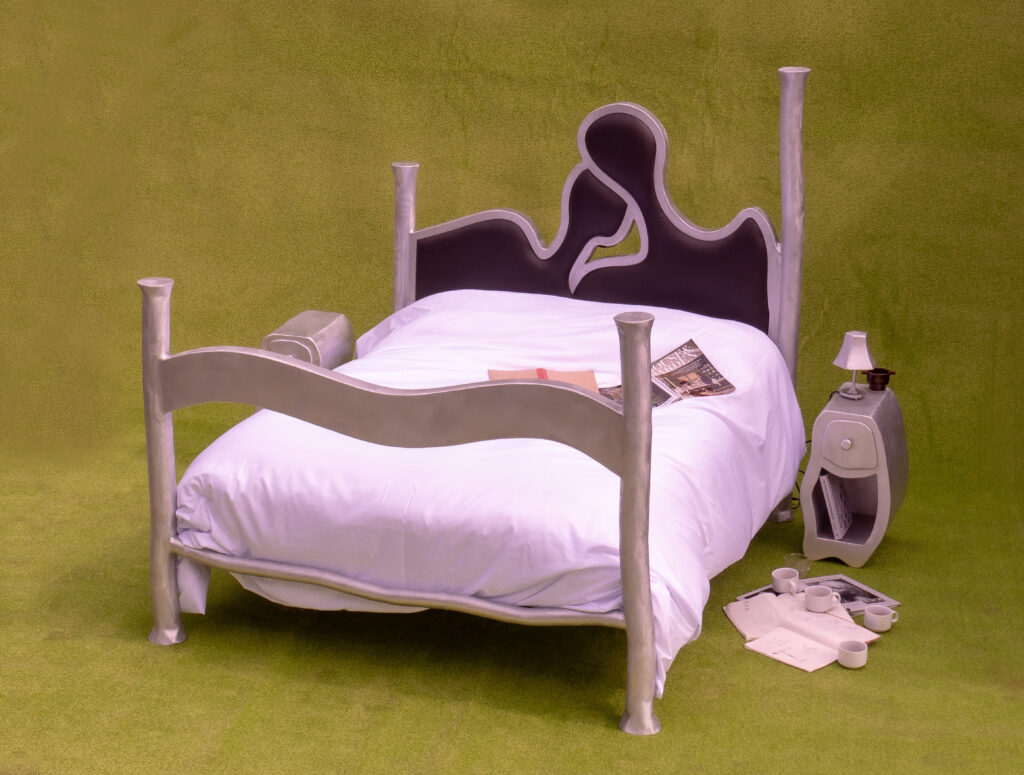
The studio’s more recent Dream / Reality collection develops the idea that objects do not merely occupy rooms, they can actively transform them. A sculptural bed, inspired by the head-shaped frames of two Salvador Dalí paintings, turns the bedroom into a place for imagination and expression. Even smaller objects are designed to shift how a space is perceived, used and felt.Rather than focusing only on matching fabrics, finishes and colours, Six Dots proposes an emotionally durable approach to interiors, one concerned with whether the objects in a room make its inhabitants feel more at home
Permission to Loosen the Rules
As an interior designer, I have followed Six Dots Design for some time, drawn not only to its pieces, but to the freedom behind them. In a design landscape still heavily shaped by polished minimalism and carefully coordinated interiors, Ellwood’s work feels like permission to loosen the rules.
Six Dots understands that a home does not have to behave like a showroom, and furniture does not have to fade politely into the background. It can be strange, imperfect, funny and emotionally specific. Most importantly, it can help the people living alongside it feel more like themselves. Six Dots Design creates furniture, lighting and objects from its East London workshop, working with private clients, interior designers, collectors and curators on existing pieces and bespoke commissions.