
Words by Avishag Elkayam
There is a particular kind of quiet that surrounds an excavation. Dust settles differently there, and so does time. When archaeologists opened a house in Pompeii, one that would later be named for its garden, they found ceramic jars and the faint chemical memory of pollen, violet, rose, basil, thyme, Florentine iris, lemon balm. It took a moment to understand what they were looking at, not the debris of a household, but the remnants of a working perfume atelier, run by a man named Agathon, who once composed scent for the aristocracy of Rome. Almost two thousand years passed before anyone thought to ask what that atelier might still have to say.
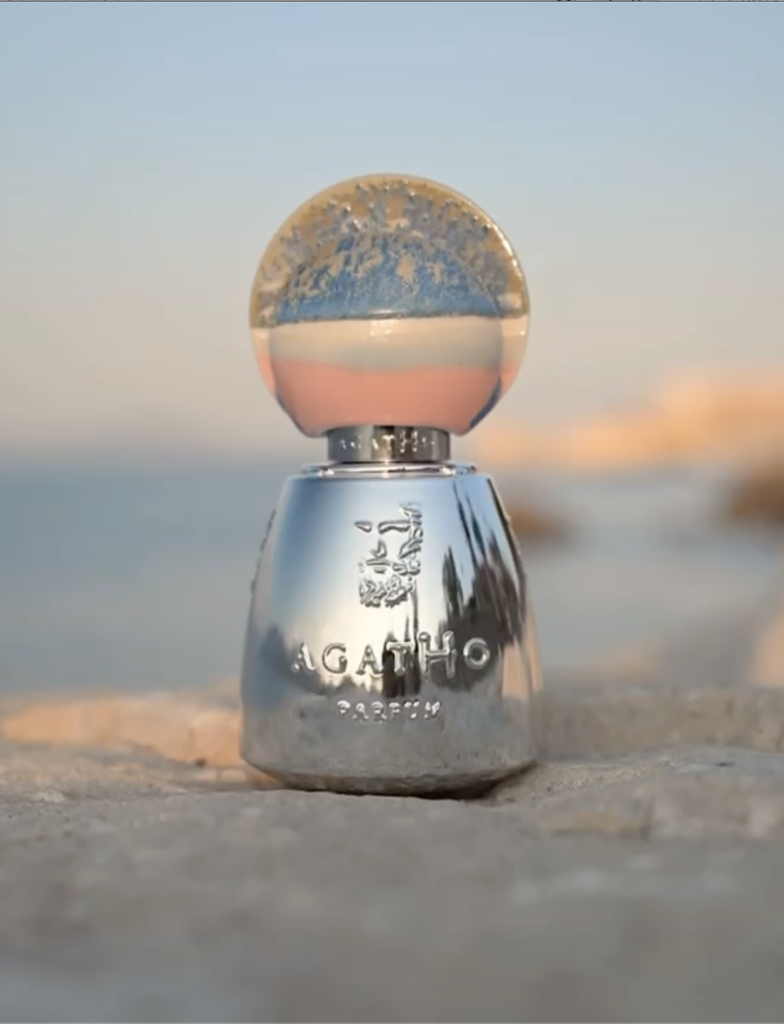
The answer became a house of its own. Agatho Parfum did not begin with a fragrance, but with an idea, formed in 2016 through a project called Caminus Capodimonte, drawn from the porcelain tradition of Naples that dates back to 1740. The house itself followed in 2018, founded by Giovanni Rignante, who came from fashion, and Alessandro Bianchi, an architect who now leads it as CEO and Creative Director. Their instinct was architectural before it was olfactory, a belief that scent should never stand alone. It is one part of something larger, joined to the bottle that holds it, the porcelain cap that seals it, the case built to carry it home.
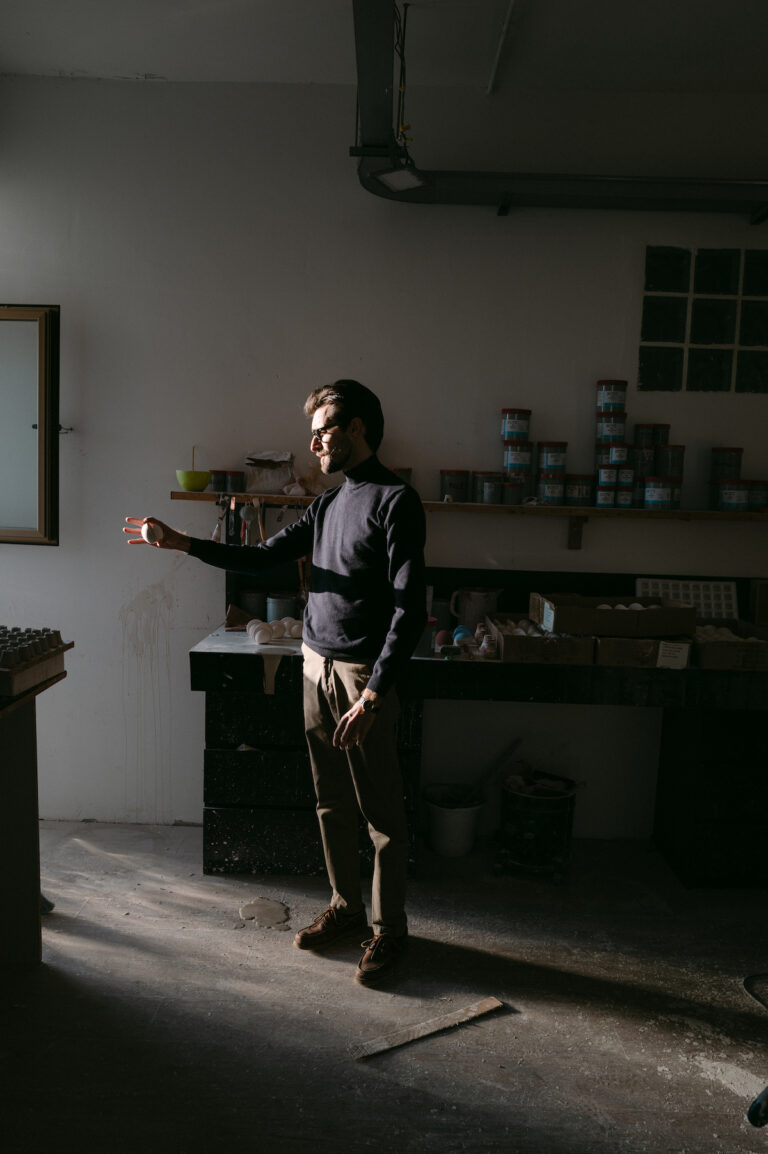 Giovanni Rignante
Every fragrance at Agatho starts the same way, with research rather than inspiration. A place, an event, a myth, examined until a single emotion rises to the surface, freedom, desire, courage, instinct, liberation. From there, the house builds outward. Within the Pompei collection, that beginning might be the House of the Vettii, the House of the Faun, or the House of the Chaste Lovers. It might be a law, the Lex Oppia, repealed in 195 BC after decades of restricting how Roman women could display their wealth. History, here, is never simply translated into ingredients. It is composed, so that top, heart, and base notes read less like a formula and more like chapters in something already written.
Nowhere is this clearer than in the Pompei collection itself. Its bestseller, 195 B.C., takes its name and its subject from the fall of the Lex Oppia. Fig leaf, pomegranate, bergamot, and mint arrive first, giving way to fig, cardamom, and jasmine, before the fragrance settles into cashmere wood, black tea, incense, cedar, and patchouli. It reads as a story of freedom reclaimed, moving from brightness into something richer, and finally into depth.
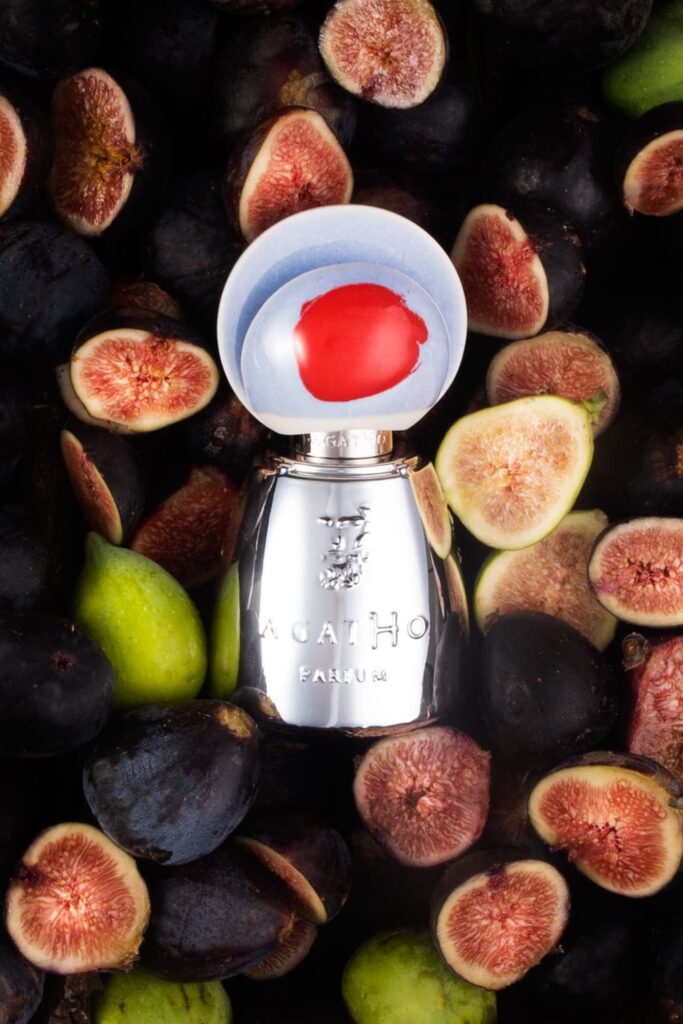
“In this house, the answer arrives as fig leaves and incense, rose and saffron, sea air and ancient wood, sealed each time beneath a small crown of porcelain.”
Castiamanti turns toward the House of the Chaste Lovers, opening with laurel, saffron, and myrtle before honey, jasmine, and rose take hold, closing on incense, oud, vanilla, and amber. Fauno draws its character from the House of the Faun, built on tobacco, tuberose, juniper, suede, and wood. Rossopompeiano borrows the deep cinnabar red for which Pompeii is known, pairing mandarin and bitter almond with orange blossom, rose, ylang ylang, sandalwood, patchouli, and vanilla.
Even the names feel unearthed rather than invented. Portamarina recalls the city’s sea facing gate. Giardinodiercole returns to the Garden of Hercules. Vettii belongs to the house once owned by two brothers, formerly enslaved, who became among the wealthiest merchants in the city. Agatho makes no claim to have recreated what Roman perfume actually smelled like. What interests the house instead is what these stories still carry, and what they might become in the hands of someone paying close attention now.
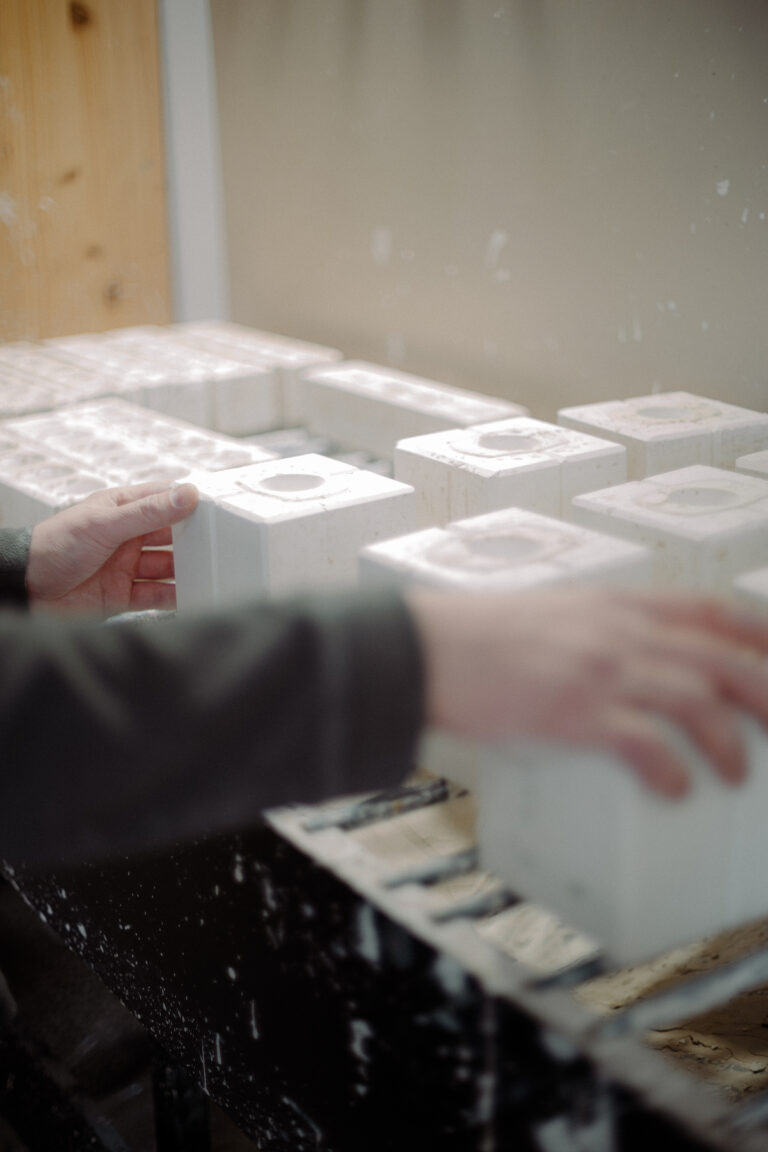
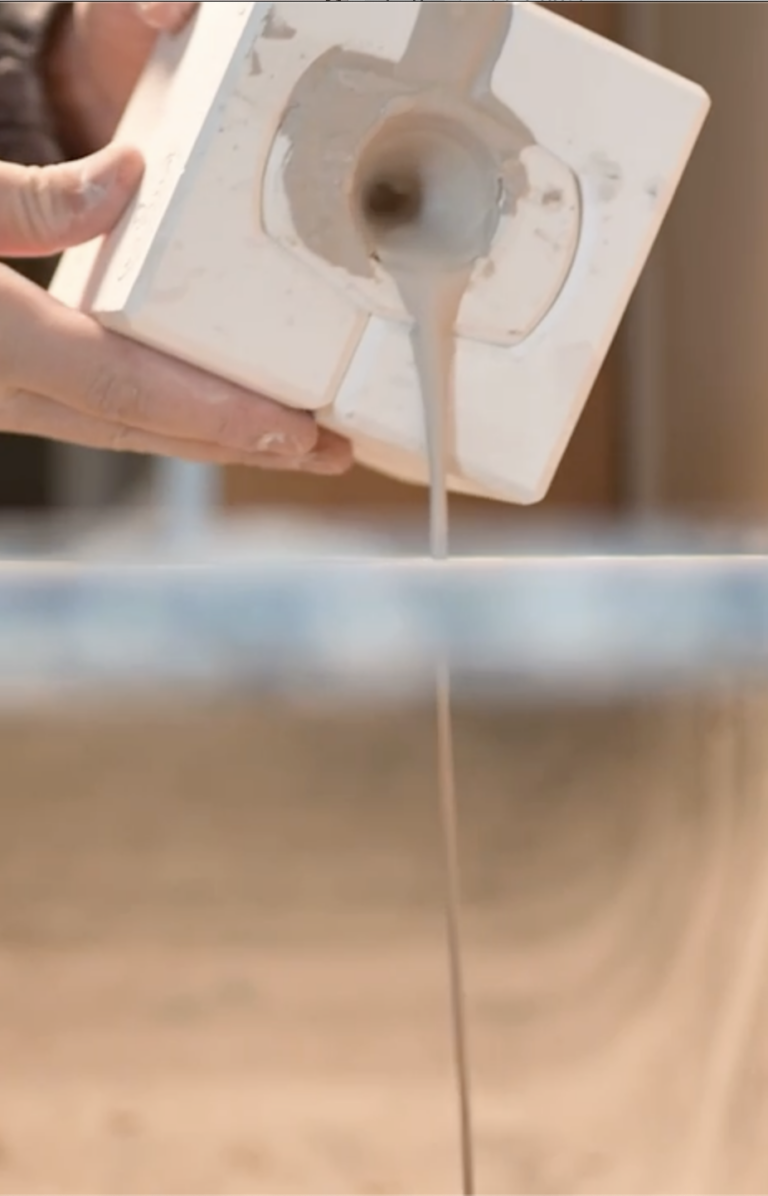
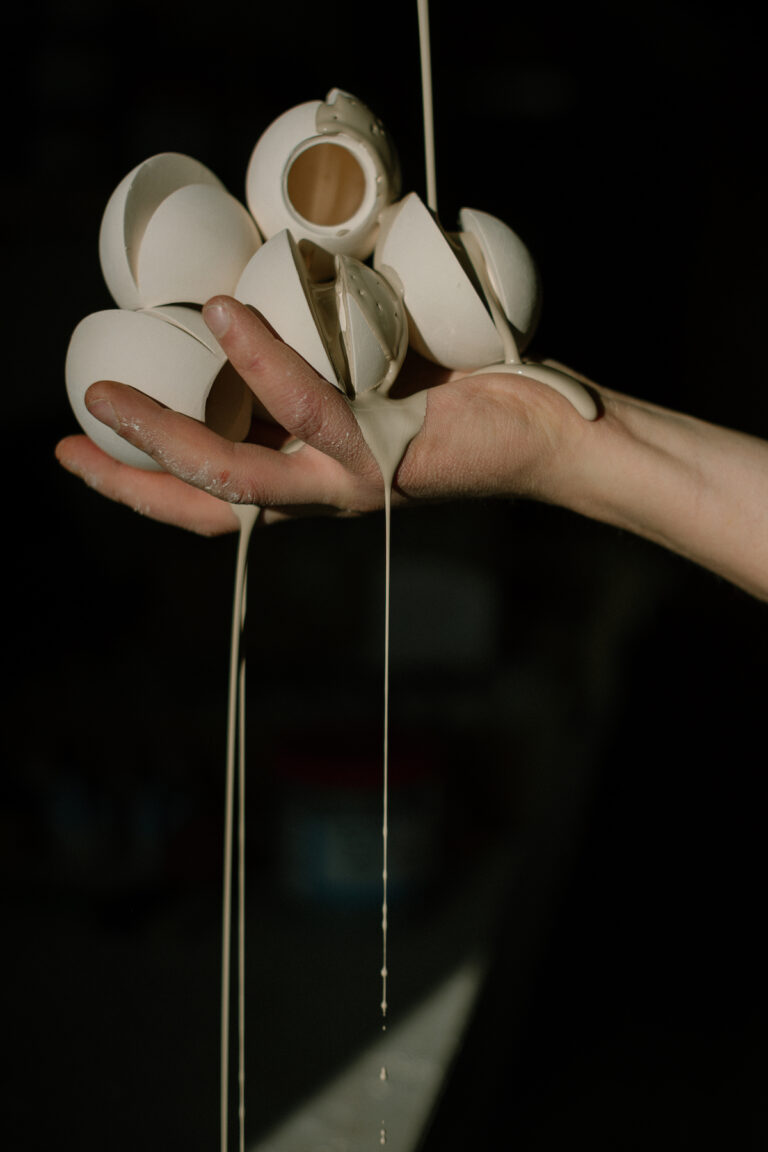
The bottles themselves ask for the same attention. Each is crowned with a sculptural porcelain cap, shaped and painted by hand in the Capodimonte tradition, then set inside a silk lined wooden case, sealed in wax, and marked with imagery lifted from Pompeian frescoes. It is closer, in feeling, to opening a small work of art than unwrapping a fragrance. Craftsmanship, at Agatho, is not decoration added afterward. It is load bearing, tying the house to a decorative tradition centuries old, in the same way its scents are tied to the botanical and archaeological record of Pompeii. In an industry that increasingly rewards a recognizable silhouette and a fast release calendar, Agatho has chosen the slower path, one built on detail, narrative, and the refusal to be uniform.
Pompeii remains the origin, but it is no longer the only world Agatho inhabits. The Olympia collection turns to the ancient Games, built around vetiver as its central material, reinterpreted across scents that trace preparation, effort, rest, and liberation. Cinisca is named for Cynisca of Sparta, the first woman recorded to win at the ancient Olympics, in 396 BC, her victory rendered in leather, vetiver, and musk, a composition about defiance more than triumph.

Pompeii remains the origin, but it is no longer the only world Agatho inhabits. The Olympia collection turns to the ancient Games, built around vetiver as its central material, reinterpreted across scents that trace preparation, effort, rest, and liberation. Cinisca is named for Cynisca of Sparta, the first woman recorded to win at the ancient Olympics, in 396 BC, her victory rendered in leather, vetiver, and musk, a composition about defiance more than triumph.Agatho was never trying to reconstruct the past exactly as it was. What it asks instead is quieter and harder to answer, what happens when something buried for centuries is finally allowed a second life.