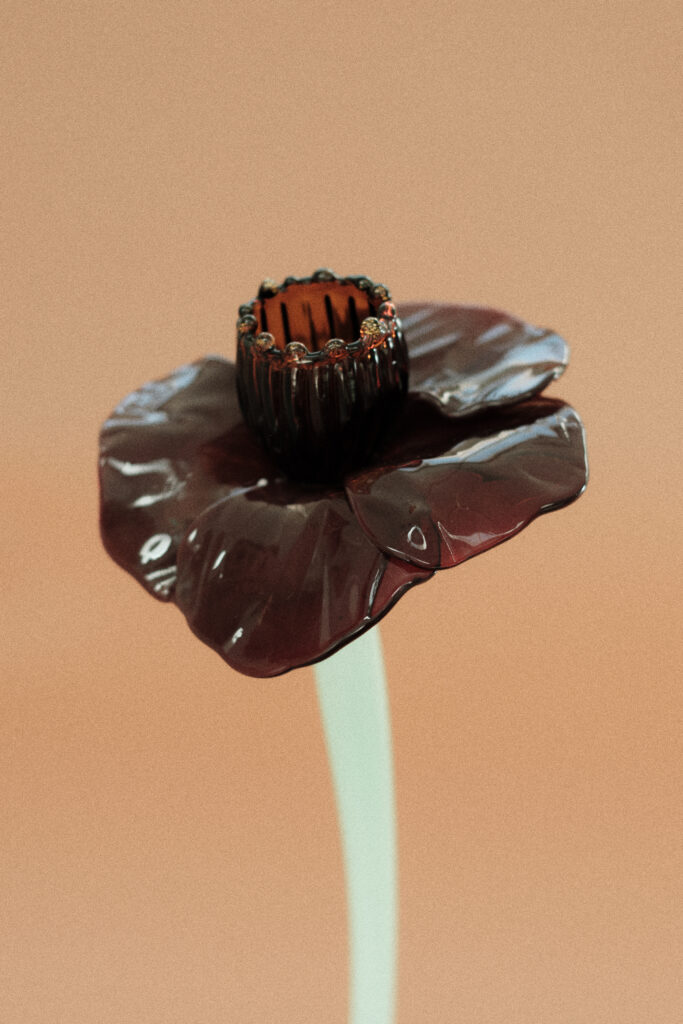
Behind La Bermeja stands Mar Bermejo Aldeguer, a Spanish designer born in 1990, trained as an architect but working on pure artistic instinct. Born by the sea and raised amid fire and glass, she grew up inside her family’s workshop, a world that shaped her visual language and her sensibility for beauty long before she ever set out on her own.
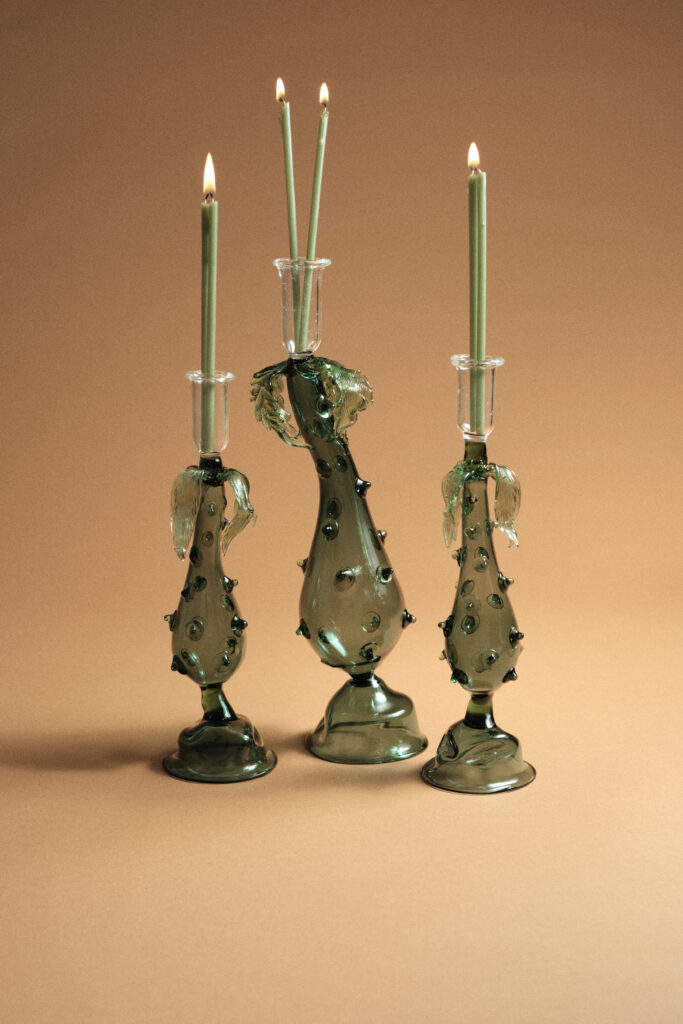
In 2022, Bermejo founded her own studio in Madrid: La Bermeja Vidrio Studio, a house where craft, memory, and nature converge. The brand is dedicated to the memory of the designer’s late grandmother, and it is her enduring passion for the natural world that drives every piece, work that channels a European way of life and a universal language of beauty, drawing as much from fine-art photography as from decorative arts, painting, and sculpture.
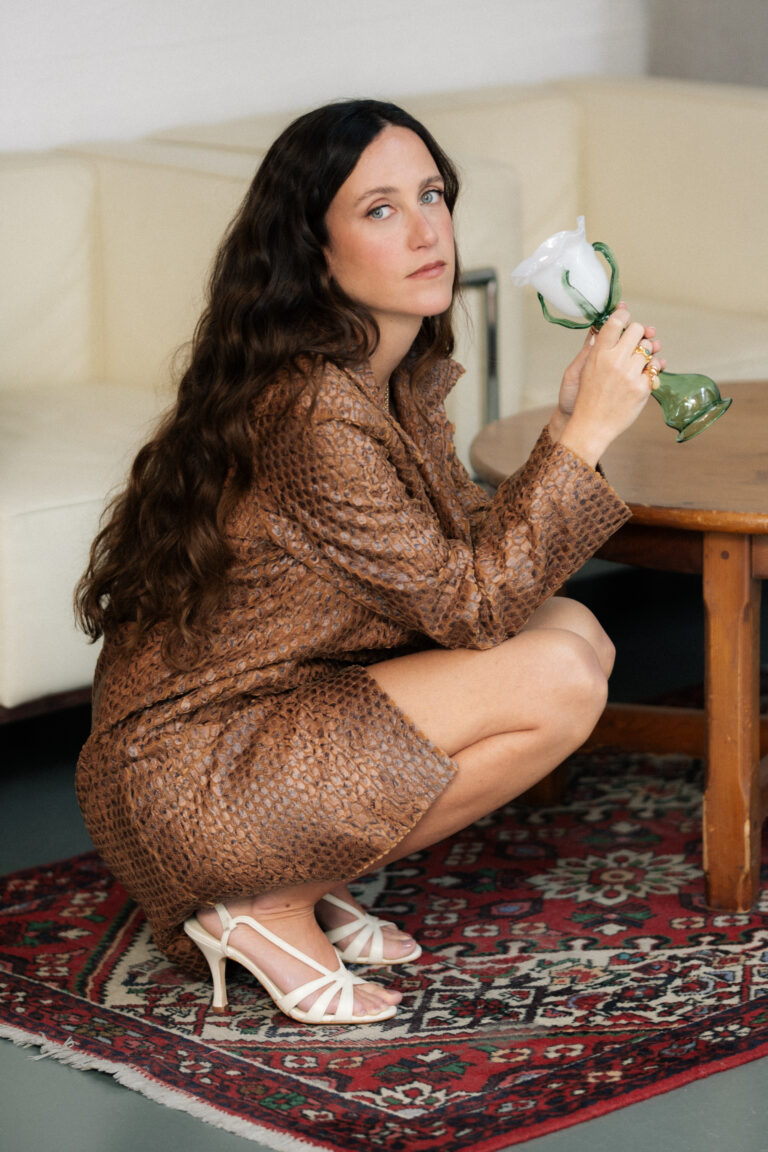
Her family carries a deep legacy in hand-blown glass: eight generations devoted to the traditional craft, a technique recognized by UNESCO as part of humanity’s Intangible Cultural Heritage. Her mother, Mar Aldeguer, is herself a well-known figure in Spanish design, a former journalist turned entrepreneur who founded the jewelry house Coolook, celebrated for pieces worn by Queen Letizia of Spain and Queen Máxima of the Netherlands. Bermejo herself served as co-creator of the family label before striking out to build something entirely her own.
From the Hamptons to Venice
Over the years, La Bermeja has produced commissions for international luxury houses including Loewe, Pomellato, Cartier, and Hermès, alongside bespoke pieces that have found their way into homes across the globe, from a jellyfish sculpture suspended in a Hamptons living room to delicate margarita coupes in Paris.
In the summer of 2026, Bermejo collaborated with the Spanish fashion house SIMORRA, translating the light of the Mediterranean into blown-glass jewelry. The collection’s central reference point was the world of Antoni Gaudí, marking the centenary of his legacy, and in particular, the way Gaudí saw nature not as mere landscape but as “a laboratory of forms.” Bermejo has described that idea as an immediate spark for her own design philosophy.
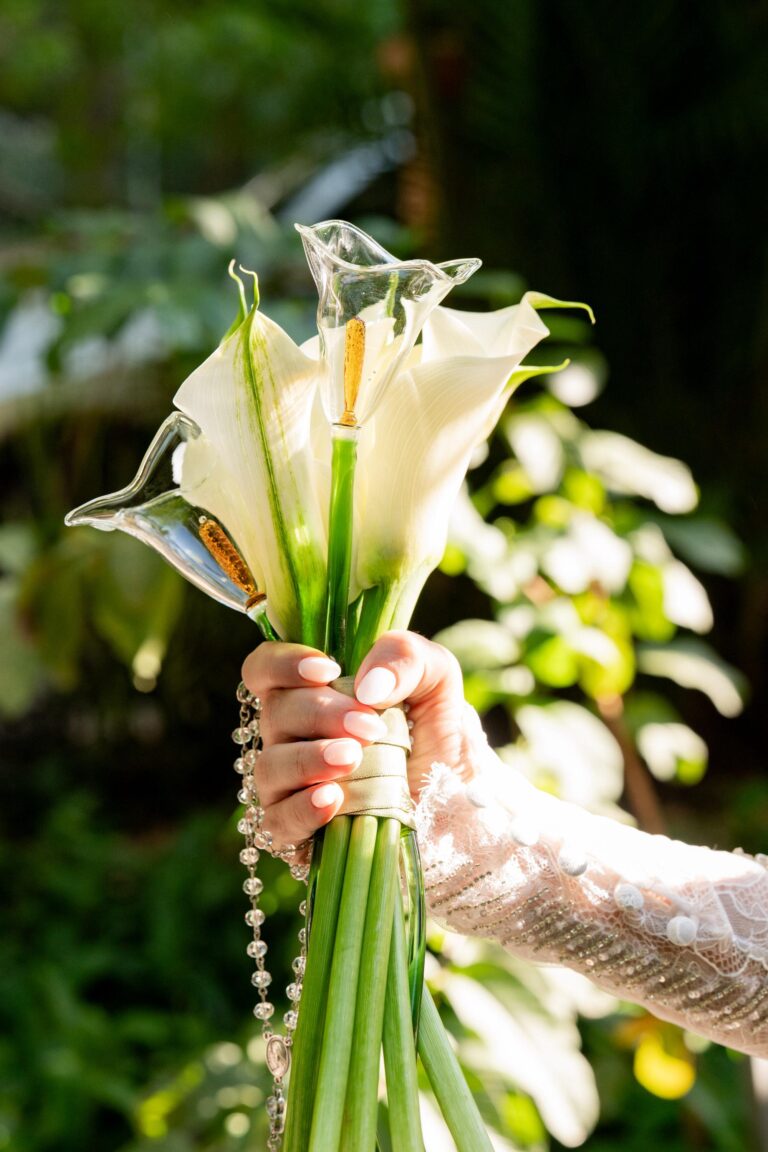 Oeuvres Sensibles
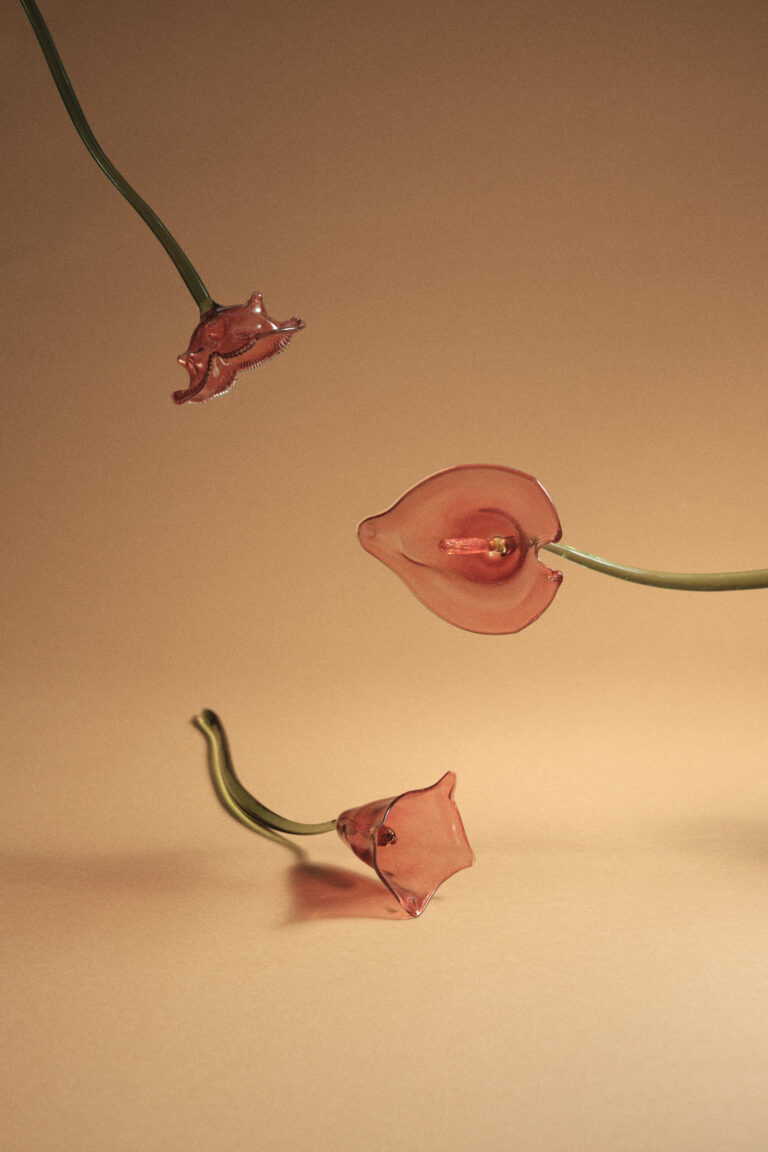
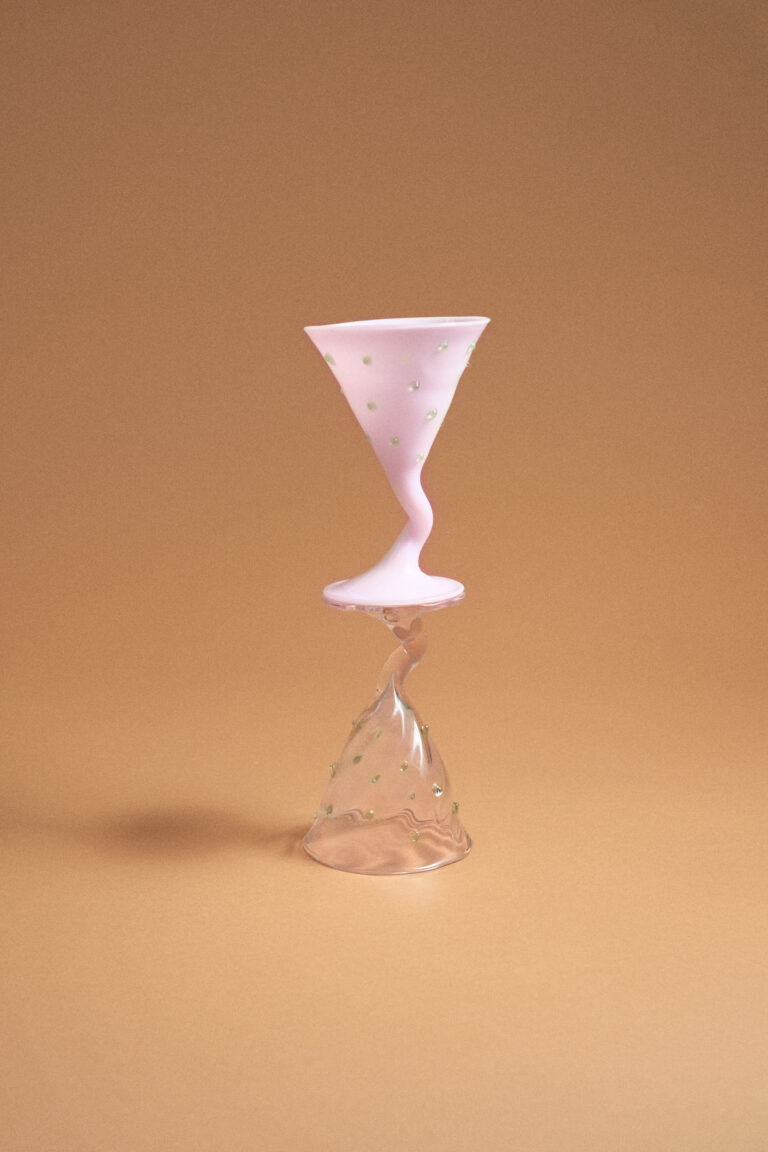 Photo by Maxime Verret
Her work has also appeared on prestigious international stages, including The Venice Glass Week, where she presented the installation “Salsa Floreale”: blown-glass sculptures in a “Floral Dip” style, set on mirrored and silvered pedestals in a gallery on Piazza San Marco, echoing the reflections and stillness of Venice’s flooded squares. Each piece, the designer says, tells a story of origin, emotion, and the beauty found in imperfection.
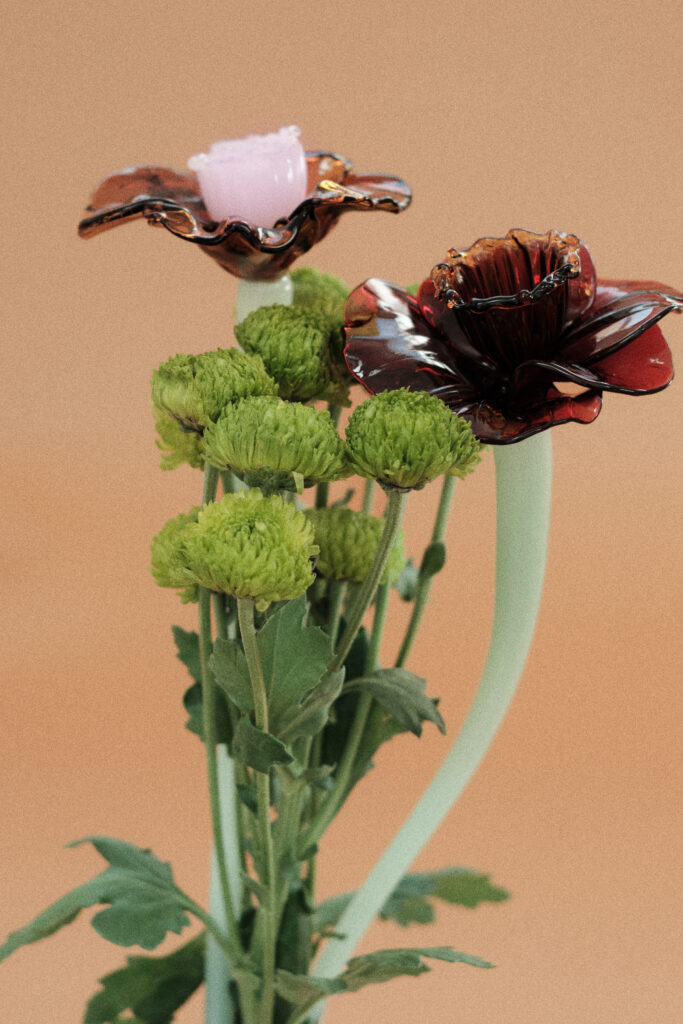 Oeuvres Sensibles
A Language of Fire, Breath, and Time
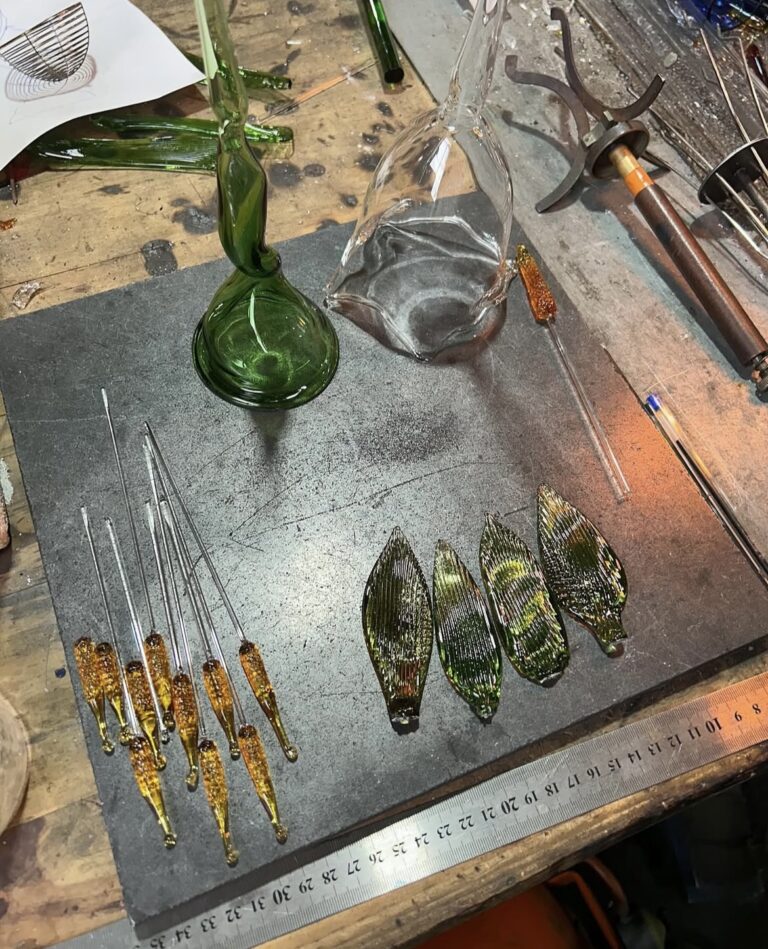
What sets La Bermeja apart is an unwavering commitment to an entirely manual process, unhurried, obsessive about every detail, in pursuit of natural forms of extraordinary quality that endure and adapt to any moment. The process begins with a sketch, moves through the preparation of raw material, and culminates in the shaping of glass through breath and four hands working in tandem, a traditional technique demanding absolute precision and coordination. From the first sketch to the finished piece arriving at its destination, the process takes roughly 45 days.
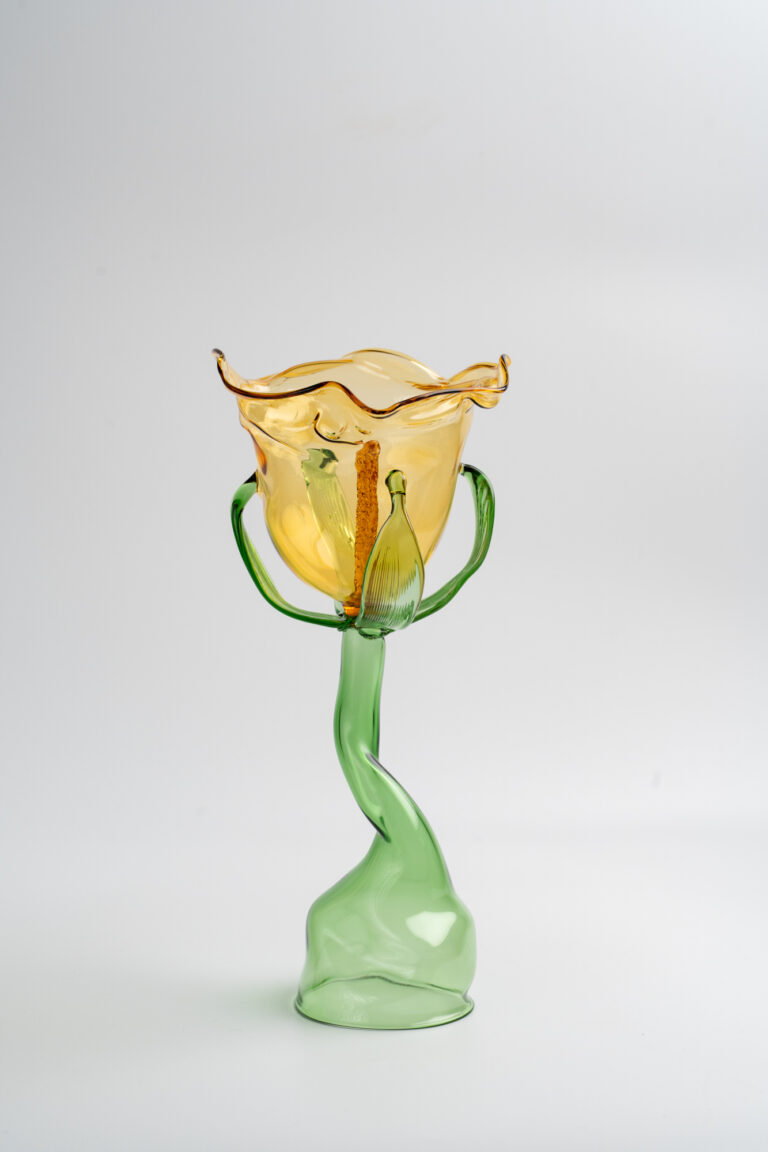
Mar Bermejo Aldeguer didn’t invent her connection to glass, she inherited it. Eight generations of family craftsmanship, an architectural training that taught her to think in space and form, and the memory of a grandmother who lives on in every piece: all of it converges in La Bermeja, a house that refuses to rush. While the world moves faster by the day, the Madrid studio keeps working the same way it always has, and sends the result out to fashion houses, galleries, and private homes around the world, proof that slowness and precision still command a place of honor in contemporary design.