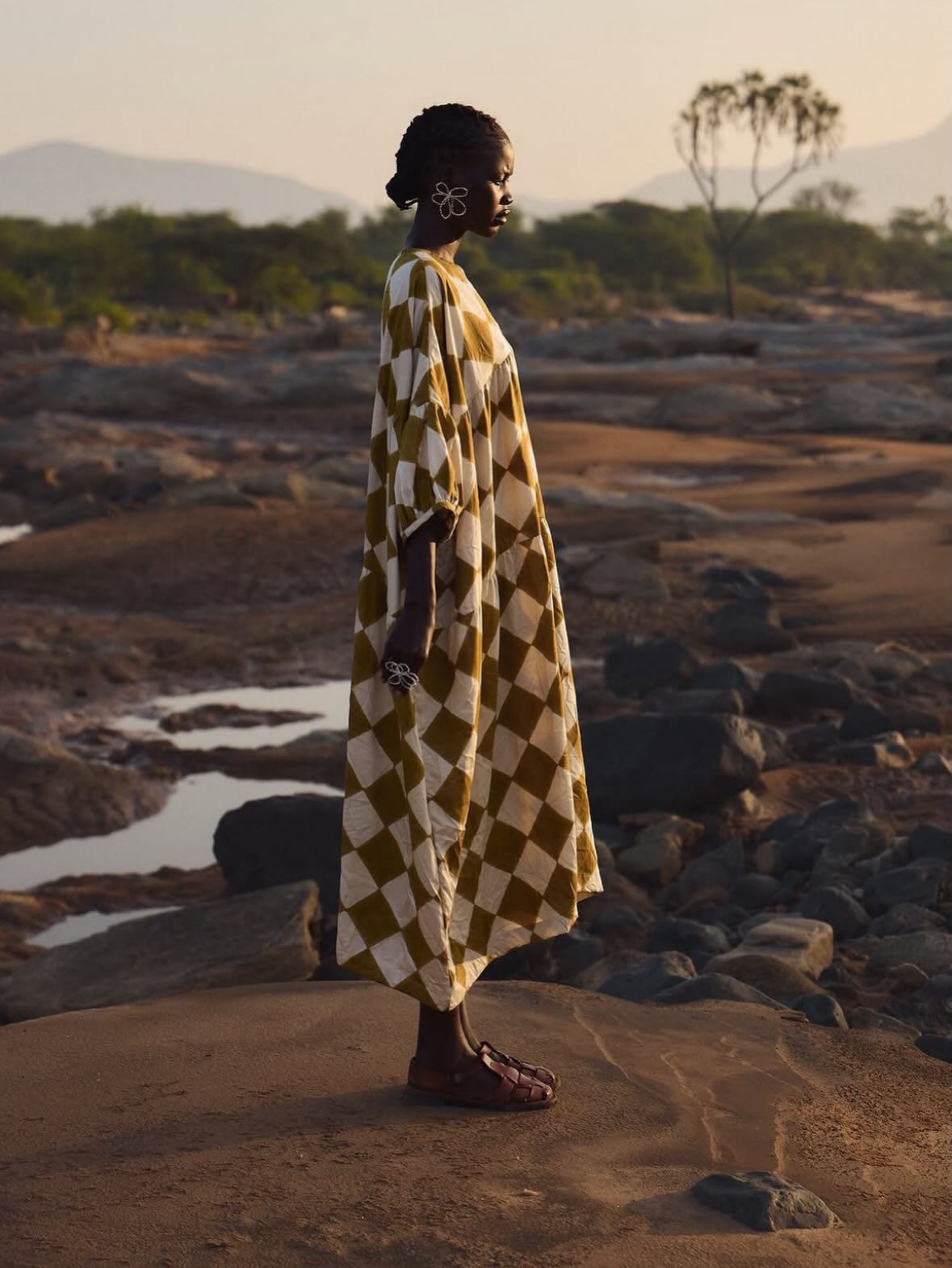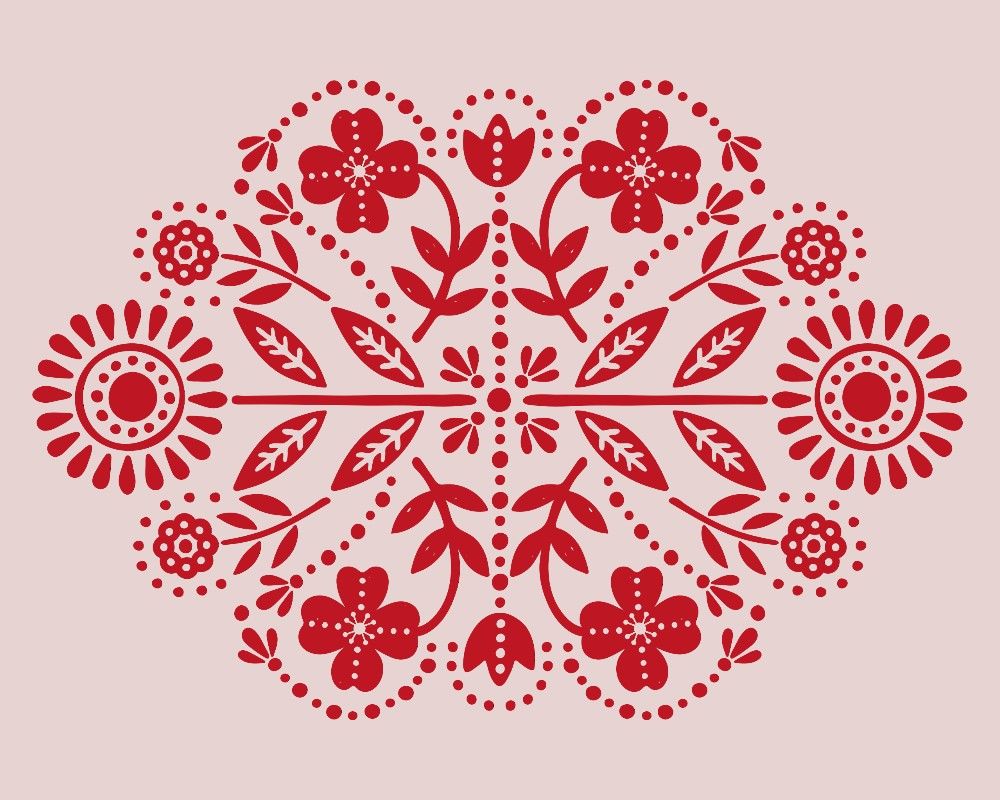
In a world where everything has already been designed, shot, posted and sold in every colorway, real innovation isn’t waiting in the future. It’s sitting in your grandmother’s closet, in a technique no algorithm knows how to copy.
Words by Ofri Weintraub
Peak saturation
Let’s be honest: we’re tired. Tired of the perfect sweatshirt that looks exactly like the other brand’s perfect sweatshirt, and of the “trend of the week” that lands on resale apps before we’ve even hung it in the closet. After a decade of logomania, and after quiet luxury turned into a beige-colored hum, fashion has hit saturation point. There’s everything, from everyone, all the time.
And that’s exactly where something interesting is happening. The most exciting designers right now aren’t asking “what hasn’t been done yet?” They’re asking “where do I come from?” And the answer to that question is turning out to be the creative goldmine of the decade.
For designers, this is genuinely good news. For years the industry told them that innovation means futuristic thinking, chasing the next material or the next breakthrough out of the lab. It’s an exhausting race, and for most creatives an impossible one, because cutting-edge technology is hard to get and almost always belongs to someone else. That pressure creates a constant tension, the feeling of running toward a finish line that keeps moving. But it turns out the opposite move is the one that works. When you slow down and dig into the core, into your own history and the hands that shaped it, that’s where the innovation is hiding. Not in the next gadget, but in the depth of what you already carry.

The craft comeback: what's on the runway (and on the street)
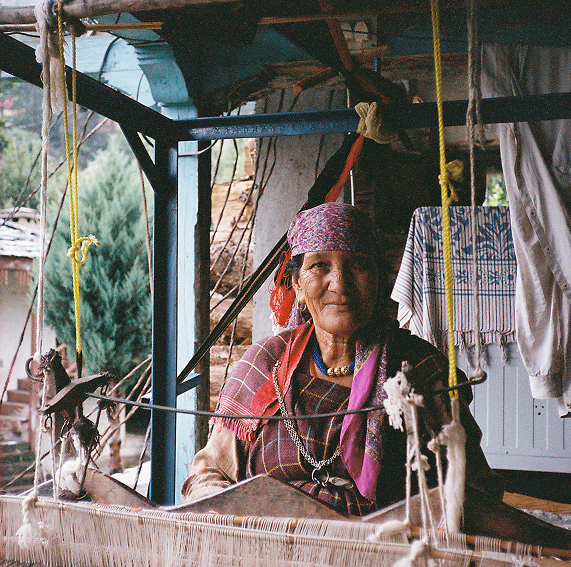
This isn’t just “embroidery is in.” It’s a deep return to handwork and to knowledge passed down through generations. A few examples worth knowing:
The Japanese jacket. The noragi, the work jacket of Japanese farmers, and the haori, worn over the kimono, have become the ultimate transitional piece thanks to their straight cut and wide sleeve. Along with them came sashiko, the white running stitch on indigo cotton originally meant to reinforce fabric, and boro, the art of patching born out of scarcity that has become one of the most coveted things in vintage. Japanese label Kapital turned the patch into a manifesto: the mended fabric no longer hides the flaw, it shows it off.
Indian embroidery. Delicate chikankari from Lucknow and zardozi worked in metallic thread are moving from Indian weddings to the runways. Dior has worked for years with the Chanakya atelier in Mumbai, and in 2023 it even staged a show in front of the Gateway of India, as a tribute to the hands that had embroidered for the house behind the scenes. For once, the credit moved from the label to the makers.
The American quilt. Bode, Emily Adams Bode’s label, built a whole empire on antique quilts that become one-of-a-kind jackets. Every piece is different, because every original fabric eventually runs out.
Grandma is back in fashion. The Icelandic sweater with its yoke pattern around the neck, crochet that used to be reserved for the throw on the couch, natural dyeing with onion skins and turmeric, and patchwork made from old tablecloths. It’s not coming back as nostalgia. It’s coming back as a statement.
The common thread? Time. A resource no assembly line can squeeze into 48 hours.
הצגת פוסט זה באינסטגרם
Magda Butrym: how Polish lace conquered Paris
If one designer embodies this idea, it’s Magda Butrym. The Polish designer didn’t look for inspiration in Tokyo or Marrakech. She looked homeward, at Slavic dress traditions, and turned them into a contemporary, sexy language.
The peak came with lace from Koniaków, a small highland village in the Beskid Mountains of southern Poland. Several hundred women practice the craft there, and what sets it apart is that it has no templates or patterns: each lacemaker works from her head, and many of them learned as little girls. For generations this lace mostly decorated tablecloths and folk costumes. In 2025 Butrym dedicated an entire collection to it at Paris Fashion Week, and the lace also made the cover of Vogue Polska.
הצגת פוסט זה באינסטגרם
But what makes Butrym a case study, and not just another designer with inspiration, is that she works with the makers themselves. She didn’t “take inspiration” from the lace and send it off to a factory. She has worked for years with Polish craftswomen, including weavers and lacemakers. Butrym herself has said that after the big wave of quiet luxury, crochet and embroidery feel almost like a fairytale, and that she’s been doing this for a decade. Their moment simply arrived. And it did: Eastern European folklore went from a niche reference to a full-blown trend, and a collaboration with H&M brought that language to the high street too.
The exact same move is happening in the Alps. The dirndl had become a beer-and-pretzels costume, and Annina Dirndl, the label of Bavarian designer Annina Pfuel, whose family has worked in textiles for generations, is giving it back its dignity: pastel dresses inspired by the 18th century, shoots that reference Sofia Coppola, and suddenly it’s a dress a 27-year-old wants to wear to a friend’s wedding, not an Oktoberfest outfit.
Neither of them invented the tradition. Both of them invented a new context for it. And that, precisely, is the definition of innovation.
הצגת פוסט זה באינסטגרם
“If tradition turns into a history lesson, the customer goes home. If it turns into something you can’t get anywhere else, they’ll wait in line for it.”
The magic: don't copy, translate
This is where we need to be critical: not every embroidered jacket is craft, and not every “ethnic inspiration” is a tribute. The question is whether the tradition has been translated, or merely copied.
Translation means the tradition doesn’t enter the collection like a museum exhibit. It’s raw material that gets edited, like Koniaków lace on a minimalist evening dress, or sashiko suddenly showing up on an oversized wool coat. And the result has to be coveted. Not “important,” not “worthy,” but something people genuinely want. If tradition turns into a history lesson, the customer goes home. If it turns into something you can’t get anywhere else, they’ll wait in line for it.
Then there’s the harder part: honesty. The first question a designer should ask isn’t “what’s beautiful?” but “what’s mine?” Butrym goes back to Poland and Pfuel goes back to Bavaria, and their story is believable precisely because it really is theirs.
And if your roots aren't there?
Not every designer has to work only with their grandparents’ traditions. But whoever chooses a technique far from their own has to do it right, and the industry has already paid for that lesson. When Isabel Marant was accused in 2015 of copying the embroidery of an Indigenous community in southern Mexico, it became an international scandal, and Mexico’s culture ministry has since called out other brands too, including Carolina Herrera in 2019. That’s what it looks like when you take without asking.
The right way is more expensive and slower, but simple: work with the makers themselves. Hire the embroiderers from Lucknow or the women of Koniaków, and give them credit and fair pay. That way tradition doesn’t just get a stage, it survives. A craft nobody commissions dies, and every commission like this is one more generation learning the technique. And a bonus: no factory in the world will crochet lace like someone who’s been doing it since the age of six.
Some brands have built their whole identity on exactly this. Danish label Sissel Edelbo has spent more than 20 years upcycling vintage saris bought from the wardrobes of Indian women, and its kantha quilting, a village technique of layering old sari scraps into blankets, is done by artisans in India. The result is Nordic silhouettes cut from fabric that carries generations of Indian history. In Kenya, Hamaji, whose name means “nomad” in coastal Swahili, was founded in 2017 by Nairobi-born designer Louise Sommerlatte. Its embroidery is designed together with a small group of artisans in Nairobi, its knits are hand-made by women in the Mount Kenya region, and the brand has stretched that network all the way to Indian weavers. Neither brand hides the hands behind the garment. They put them front and center.
The good news is you don’t have to search alone: there are organizations whose whole job is making this match, like the UN’s Ethical Fashion Initiative or the American nonprofit Nest.
הצגת פוסט זה באינסטגרם
“It’s the only innovation left: to take a step back and bring out something no one else could have brought. Because whatever comes from your roots, no one has done before you.”
The bottom line
We live in an era where anyone can produce anything. AI designs prints, and factories copy runways within days. In all that noise, the only thing that can’t be copied is your story: the fabric your grandfather brought from the old country, or the embroidery you saw at a wedding when you were a kid.
This isn’t nostalgia, and it isn’t an escape into the past. It’s the only innovation left: to take a step back and bring out something no one else could have brought. Because whatever comes from your roots, no one has done before you.
So next time you go looking for the new thing, start looking for the old thing. It’s probably waiting closer than you think.