Words by Avishag Elkayam
For Rik Frans Jansen, architecture does not necessarily begin with a building. Sometimes, it begins with a bolt, a sheet of aluminium, or a structural problem waiting to be solved. Across furniture, interiors and spatial design, the Netherlands-based designer works from the detail outward, allowing materials and methods of construction to shape the final form.
An Accidental Beginning
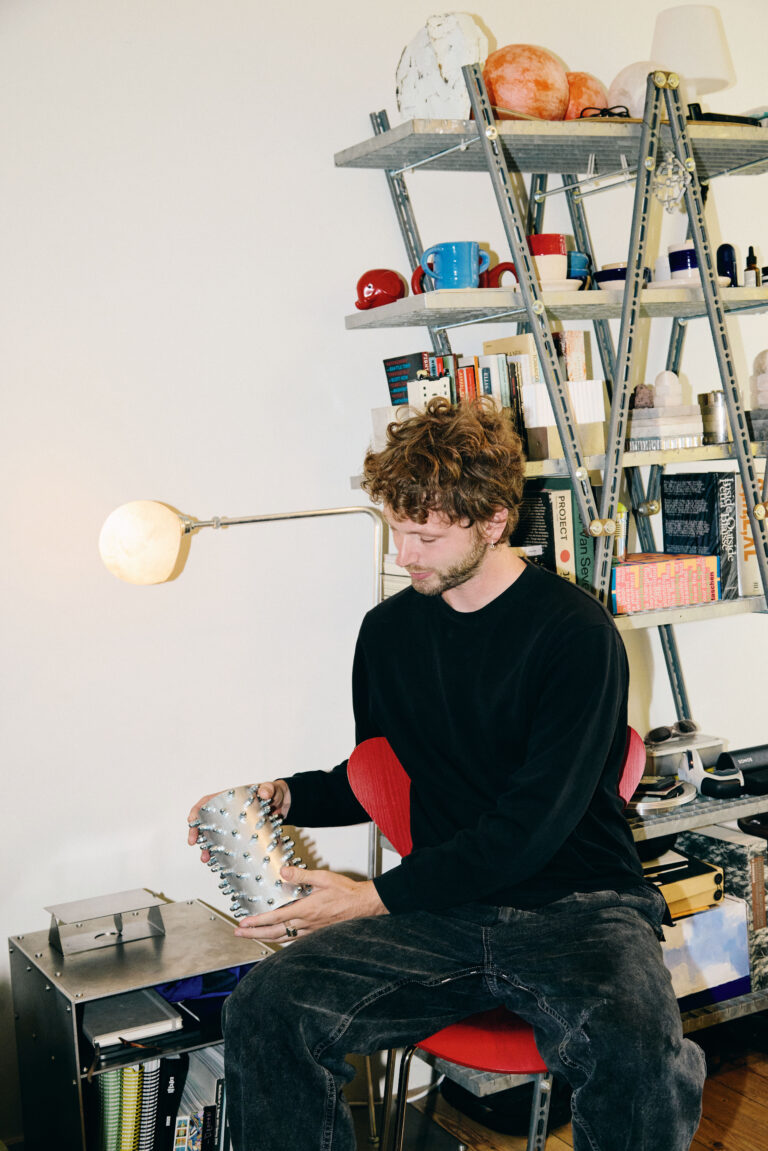
Jansen’s route into design practice was somewhat unconventional. Trained in architecture, he completed his master’s degree at TU Delft in 2025, but had already begun building his own studio while still studying. Furniture initially entered the picture informally, through pieces he made for himself alongside his architectural education. Then came Madrid. During his final year at university, Jansen managed, in his own words, to “bluff” his way into an interior assignment for a shop. What began with convincing the owners that he could create a piece of furniture for the space quickly expanded into a commission for the entire interior. The project went smoothly, more work followed, and in 2024 RIKFRANSJANSEN was officially launched.
Today, the studio operates across architecture, scenography and product design, working internationally with clients throughout North America, Europe and Asia. Its projects and exhibitions have reached cities including Amsterdam, Antwerp, Los Angeles, Madrid, Milan, New York, Paris and Tokyo.
Architecture at Every Scale
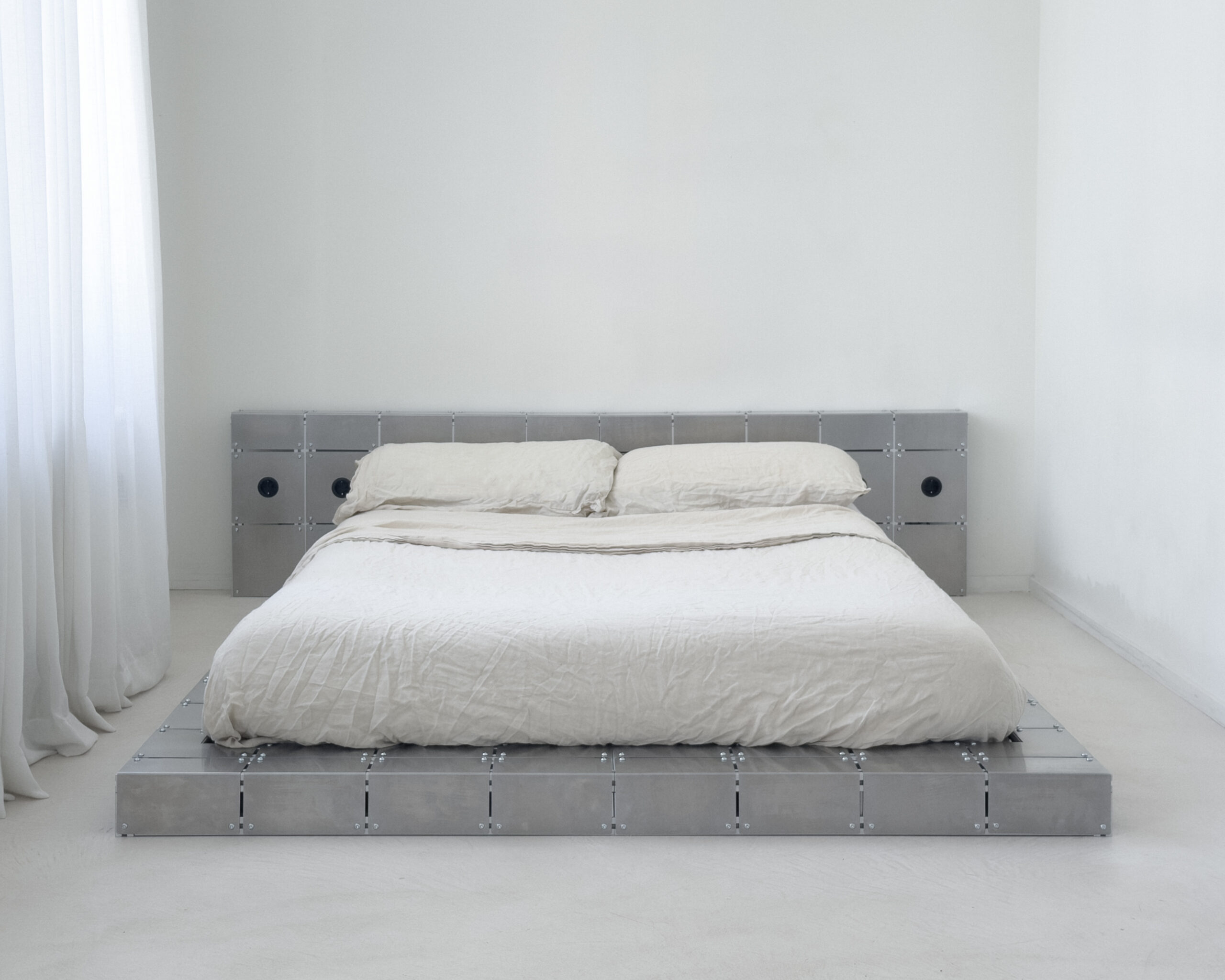
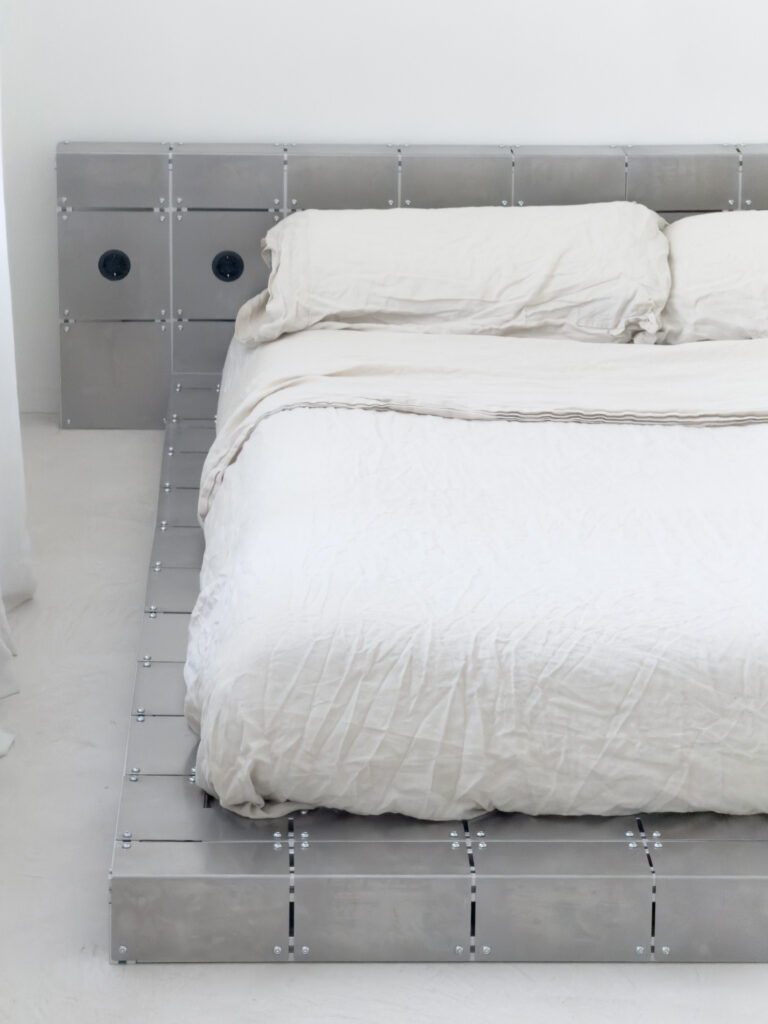
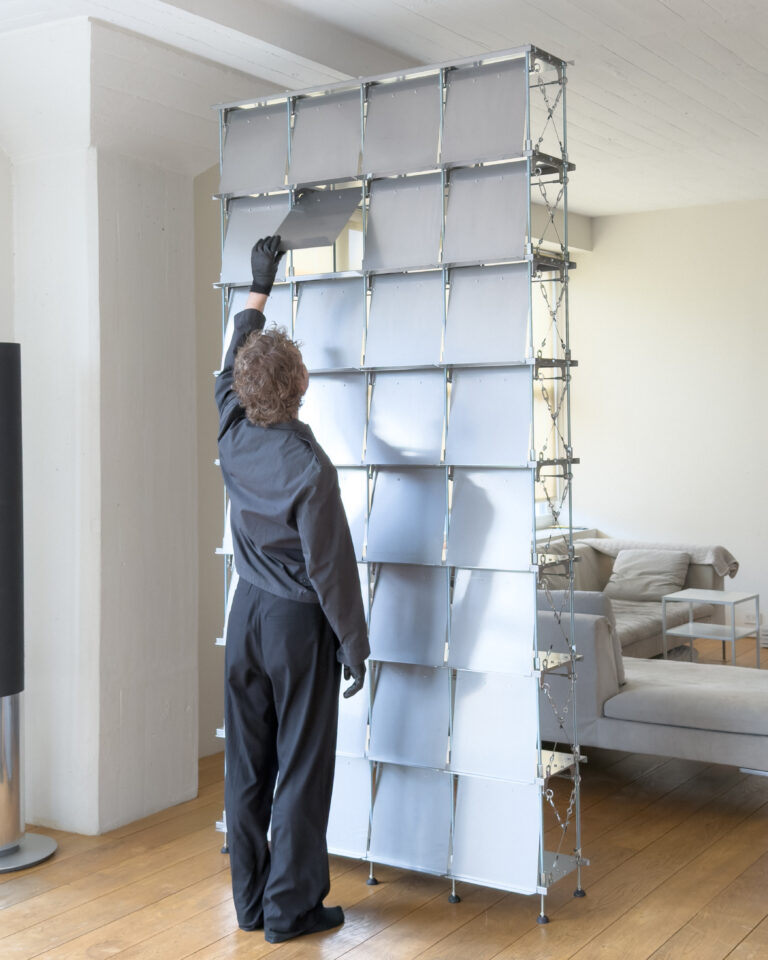
Despite the variety of formats, Jansen does not see a sharp distinction between designing a space and designing an object. His architectural training remains the foundation of both. “I’m trained as an architect, and in my opinion architecture can really be applied on any scale,” he explains. That might mean approaching a project spatially, structurally or through its materials, but often, his process begins at an unexpectedly small scale. “I really love starting the design from a detail. I think the more aesthetic quality of my work derives from this.” It is an approach visible throughout the studio’s work. Rather than treating construction as something to conceal beneath a polished exterior, Jansen allows it to become part of the visual identity. Connections, reinforcements and tectonic details are not simply technical necessities, they become what the studio describes as “functional ornamentation.”
Finding Beauty in the Solution
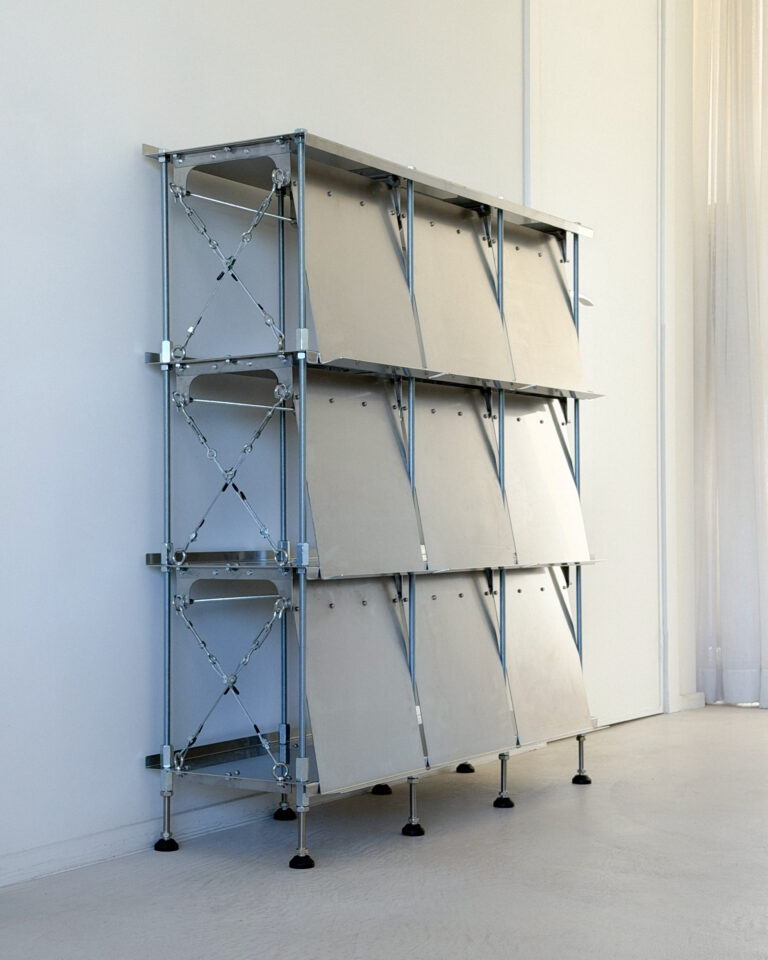
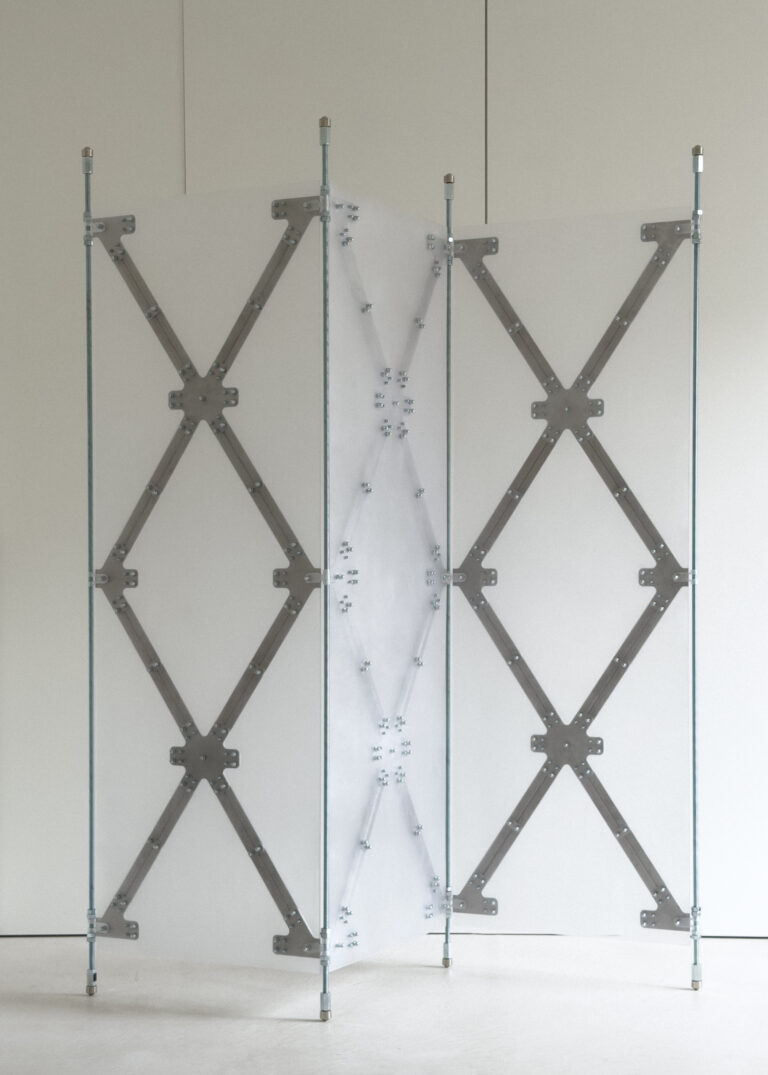
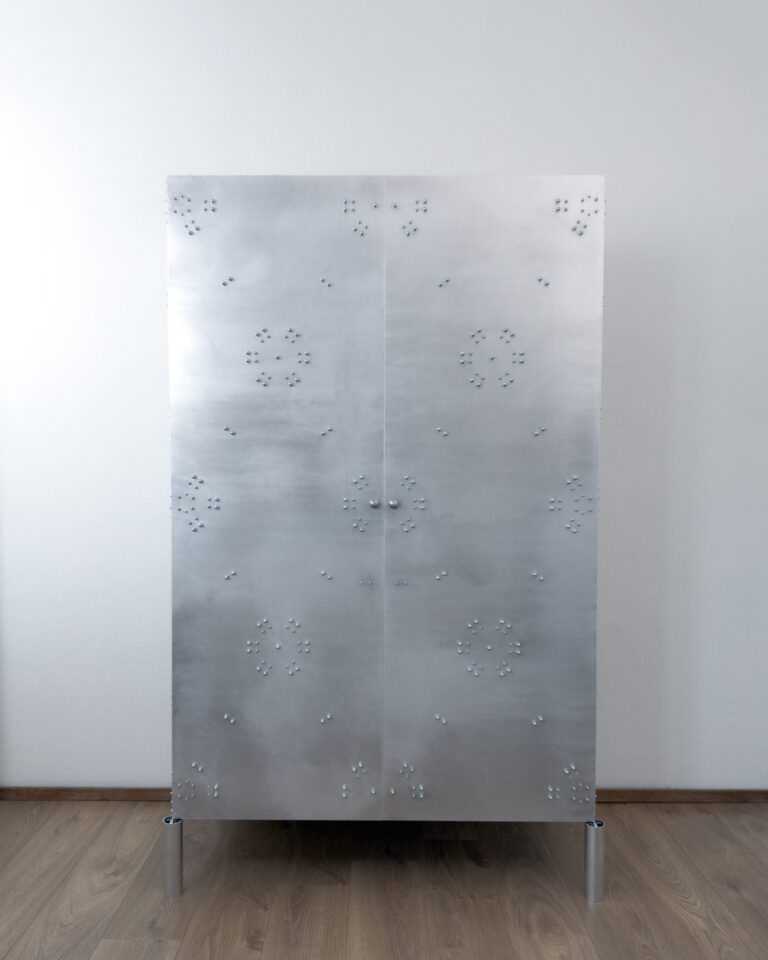
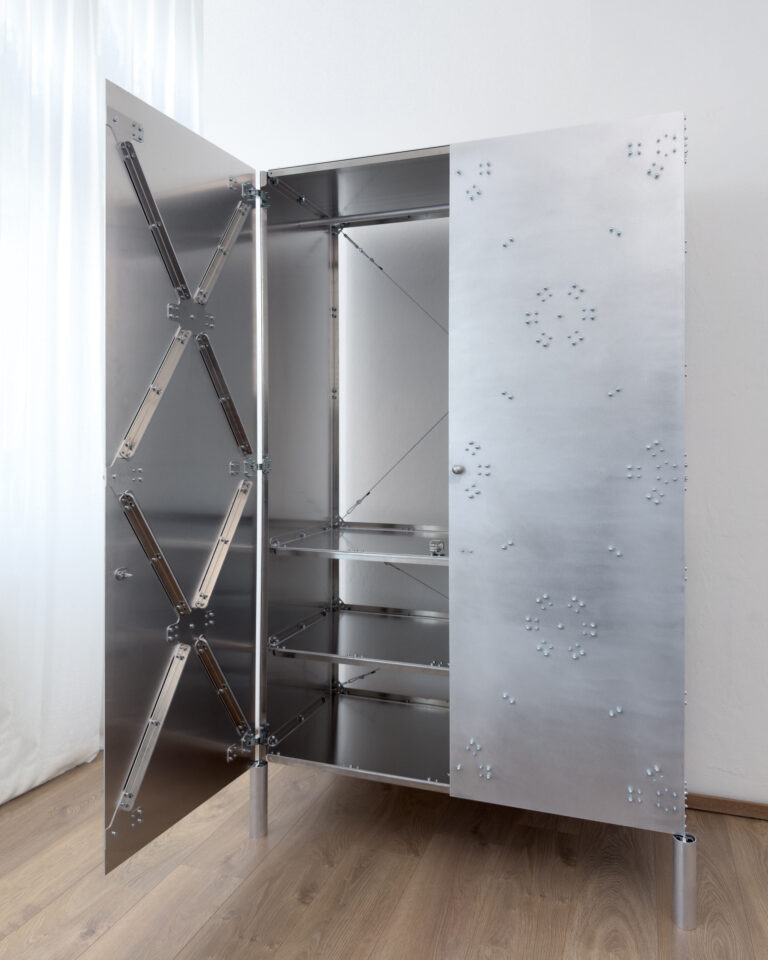
Perhaps the clearest expression of that philosophy is the Metal Flowers Cabinet. Made from thin aluminium sheets, the cabinet began with a practical problem: the material needed additional reinforcement in order to become sufficiently rigid. Jansen’s solution was to bolt crosses onto the aluminium. Structurally necessary, those reinforcements simultaneously created a repeating flower-like pattern across the exterior. What could have remained hidden construction became the defining feature of the piece.
For Jansen, the cabinet also marked a shift in his own understanding of design. Architectural education had trained him within what he describes as somewhat modernist limitations, but the project revealed a way to create something more elaborate without adding decoration for decoration’s sake. The flowers are ornamental, but they exist because the object requires them. Function and expression become the same gesture.
Structure Becomes Ornament
There is a certain contradiction at the heart of RIKFRANSJANSEN’s work, and that is precisely what makes it interesting. The studio is grounded in architectural logic, yet its objects are not austere exercises in pure function. They can be expressive, graphic and even playful. The distinction lies in where that expression comes from. Ornament is rarely applied afterward. Instead, it emerges through the material itself, through the way something is joined, reinforced, folded or assembled.
It is a philosophy that allows Jansen to move naturally between a cabinet and an interior, between product and architecture, without abandoning the same fundamental question: what happens when the way something is made becomes the reason it looks the way it does? For a studio founded only in 2024, RIKFRANSJANSEN already has a remarkably clear answer.