There is a version of this story that begins with two strangers on a boat: Lærke Skyum, a young Dane chasing textile heritage across Peru, and Adriana Cachay, a Peruvian from Lima with her own reverence for craft. What passed between them that day would eventually become Ayni, a name borrowed from the Andes and a philosophy that refuses to separate beauty from responsibility.

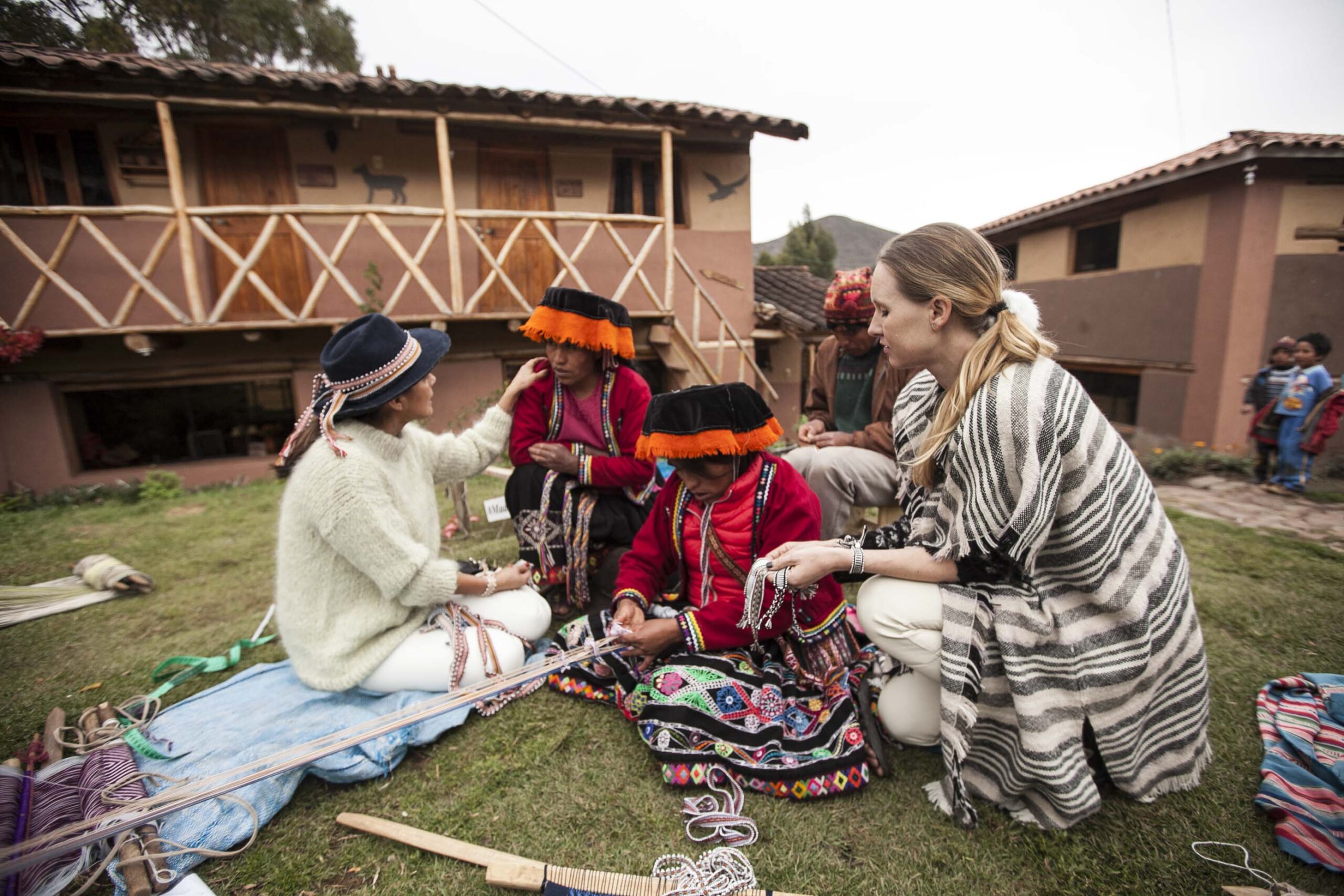
Their friendship deepened on the road, through markets and workshops, until it led them to Amantaní, an island suspended in Lake Titicaca where the air is thin and the traditions run deeper than memory. There, among Quechua communities, they encountered ayni, the Andean principle of reciprocity distilled into a single promise: today for you, tomorrow for me. It was not a slogan. It was a way of living, and they decided to build a brand around it.
What struck them most was not difference but likeness. Peruvian and Scandinavian traditions, they realized, speak a shared grammar: craftsmanship, natural materials, restraint, and things made to outlast trends. Ayni would sit at that intersection, the warmth of the Andes stitched into the clean lines of Nordic design, or, as the brand itself puts it, “a universe of hygge and heritage.”


From the start, the founders were clear-eyed that fashion alone was never the point. Every garment exists to serve something larger: formal recognition for the women whose hands make each piece, grounded in a belief, stated plainly in the brand’s own language, that when women are empowered, the impact travels far beyond a single collection.
In 2012, that belief took institutional shape. Partnering with Peru’s Ministry of Labor and Employment Promotion, Ayni launched Ayni Certify, a program that gives official recognition to artisans whose knowledge had only ever been passed from hand to hand, never validated on paper. The inspiration, once again, traced back to Amantaní, where extraordinary textile skill was quietly disappearing as artisans left for steadier work.


The results are anything but abstract. More than 300 artisans have collaborated directly with the label, and Ayni Certify has trained and certified over 2,100 artisans across Peru and Bolivia. Ninety-two percent of the artisans in the network are women, many of whom have since stepped into leadership roles in their own workshops, carrying the knowledge forward on their own terms. Every piece is handmade: never mass-produced, never rushed.

The Collections
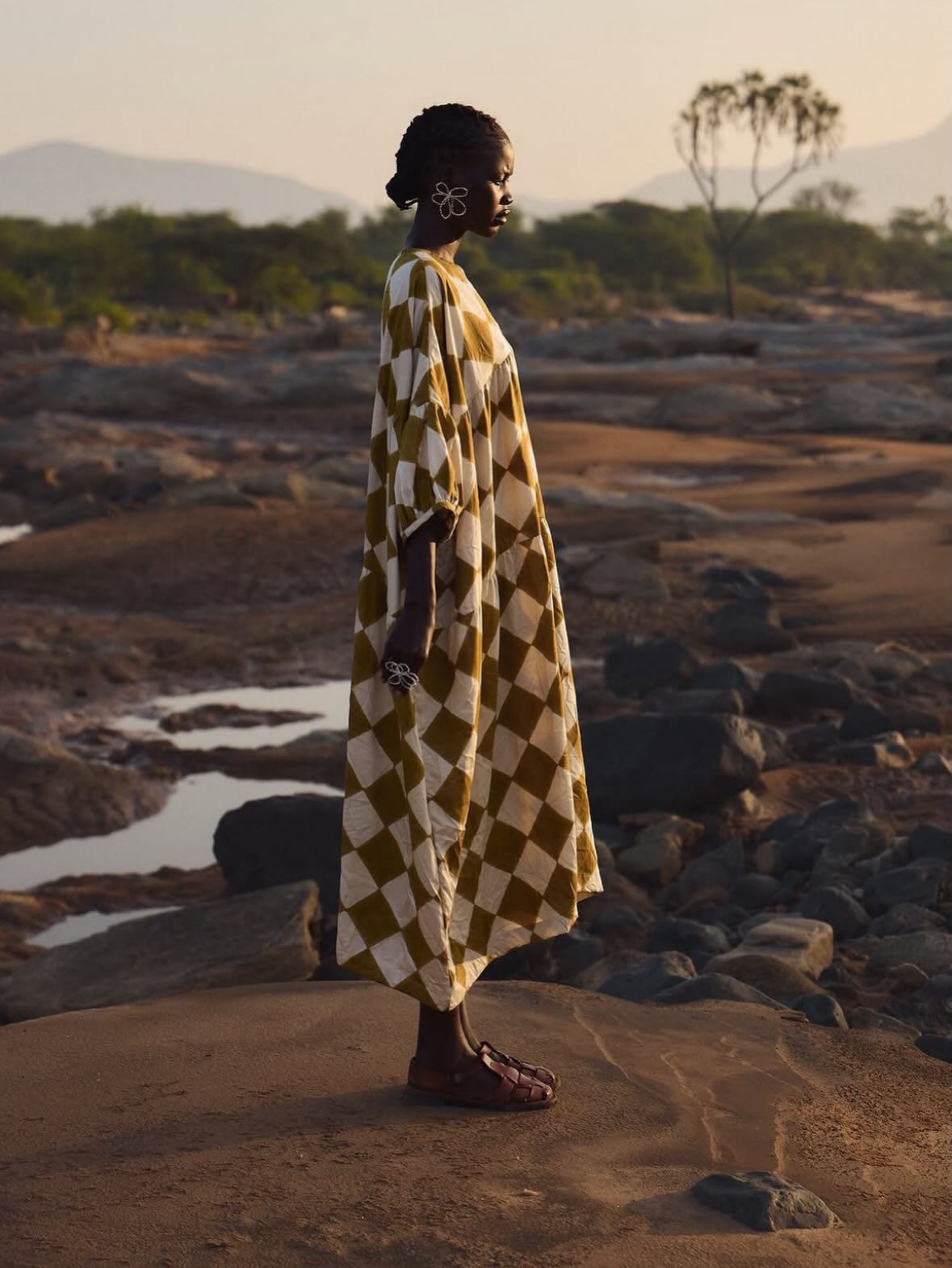
Each season reads like a mood board translated into yarn. Light Harvest (Spring/Summer 26) channels the golden, contemplative Danish summers of the painter Anna Ancher through Peruvian hand-knitting, in ethereal dresses that feel more diary entry than runway look. Strata (Fall/Winter 26/27) takes its cues from geology, rendering eroded landscapes and layers of sediment as knitwear, in silhouettes that are, in the brand’s words, “protective yet porous.” Malva de Luz (Spring/Summer 27) chases the particular quality of Andean light through open stitches and layered crochet, letting texture do the work usually left to color.
Working almost exclusively with Pima cotton, baby alpaca, and upcycled fibers, the label draws on hand-knitting, crochet, macramé, embroidery, and hand-weaving: a 5,000-year-old vocabulary that is still spoken fluently.


What began as a conversation on a boat is now sold across the United States, Europe, Asia, and Latin America. Ayni has also helped establish Peru’s first sustainable fashion and innovation cluster, accredited by Innóvate Perú, proof that its ambitions were never confined to its own label. It is now a Certified B Corporation, a designation the founders describe less as an achievement than as an ongoing obligation, “a commitment to keep questioning, improving.” From the Ayni Certify model grew Ayni Latam, a sourcing agency that opens the brand’s production ethics and its network of artisan communities to other international labels, under the banner the founders call honest luxury.
There is something almost old-fashioned about a fashion brand insisting that its supply chain be as legible as its silhouettes. But Ayni was never really about knitwear. It was about a promise made on an island in the middle of a lake, one that two women decided was worth building an entire company around. Today for you, tomorrow for me, stitched, quite literally, into everything they make.