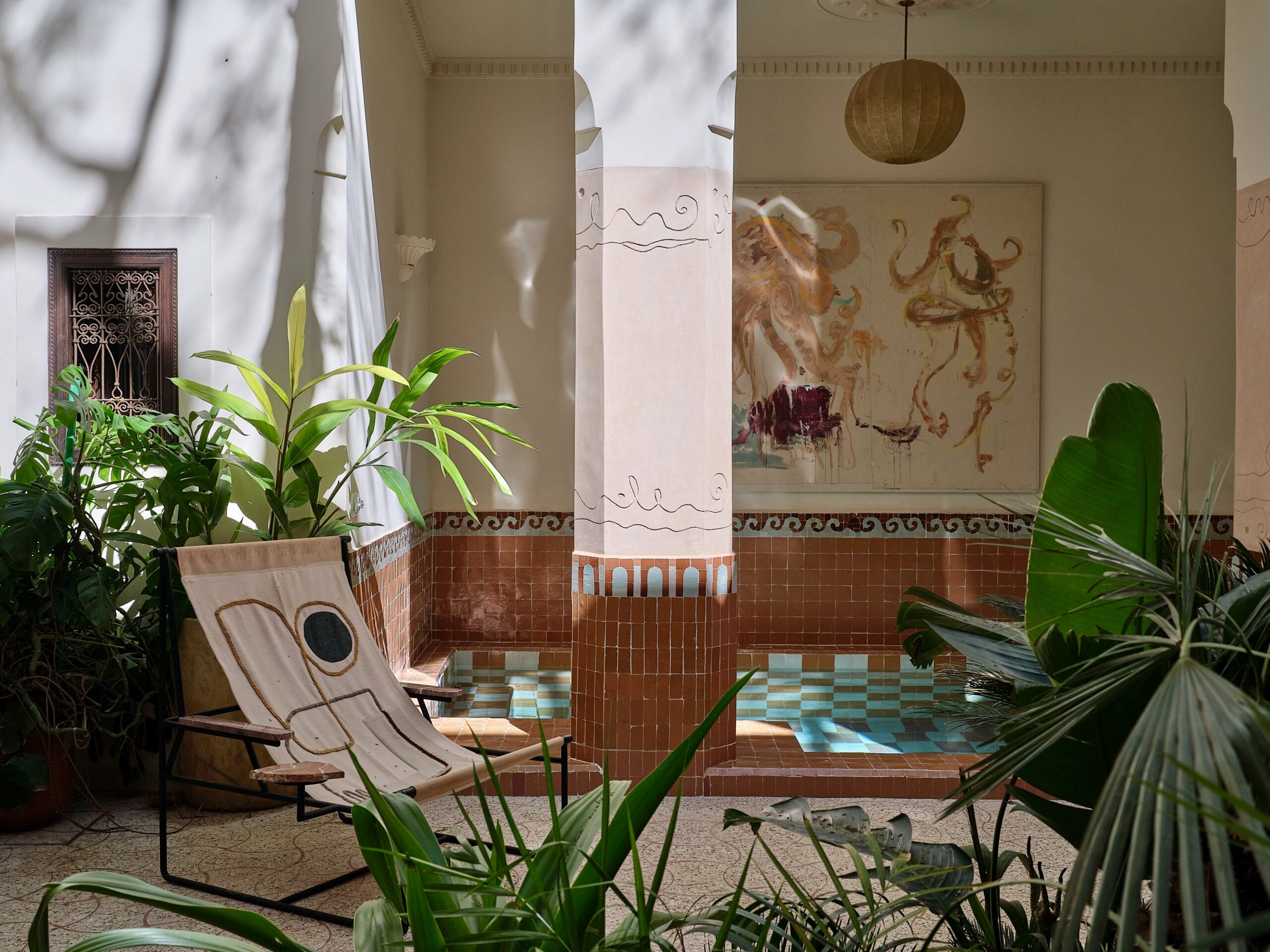
Most of what Laurence Leenaert makes is meant to live inside a room: a painted vase, a rug, a chair with a carved back. At Rosemary, she and her husband, Ayoub Boualam, made the room itself. Five of them, in fact, arranged around a courtyard in Riad Zitoun Jdid, one of the oldest quarters of Marrakech’s medina, a few steps from the Bahia Palace.
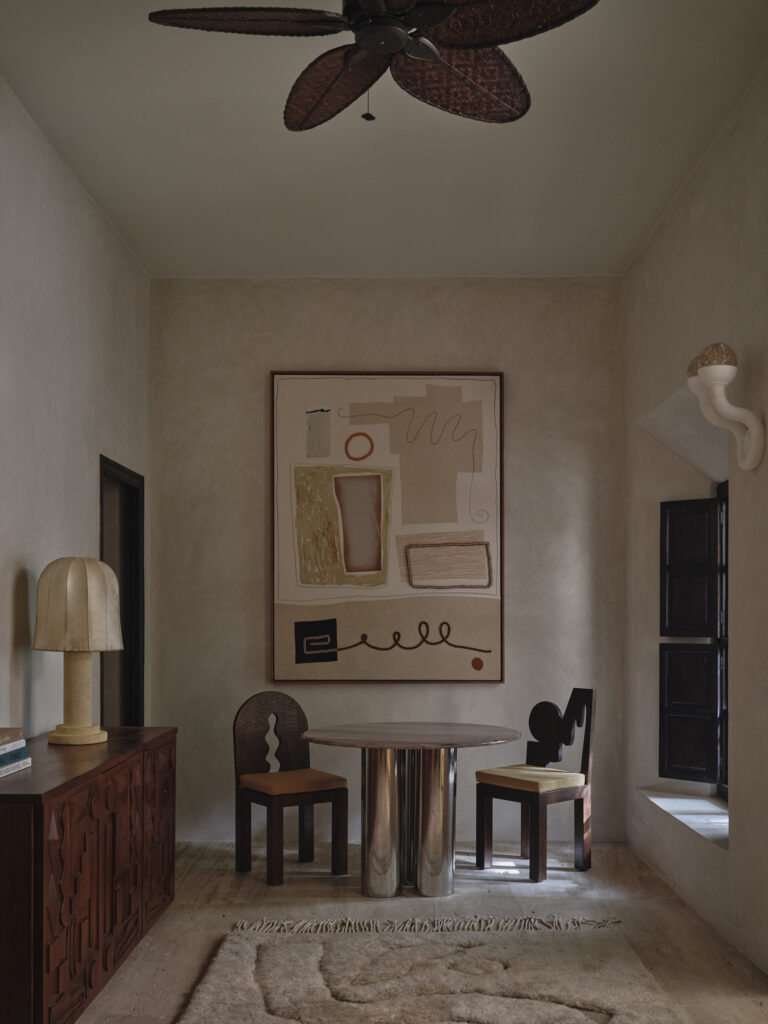 Image by Marina Denisova
The riad opened its carved cedar doors in September 2023, after years of restoration, as the couple’s first venture into hospitality. Three years on, it remains the fullest expression of everything they have built since founding LRNCE in 2013.Born in Belgium, Leenaert made her name with hand-painted ceramics, richly textured rugs, and furniture and framed works full of generous brushstrokes, carved details and cut-outs, in colours drawn from the landscape around Marrakech. Her work has travelled to galleries in New York, Paris, London and Tokyo, and into private collections around the world. Rosemary is the first time she has turned that eye on a building.
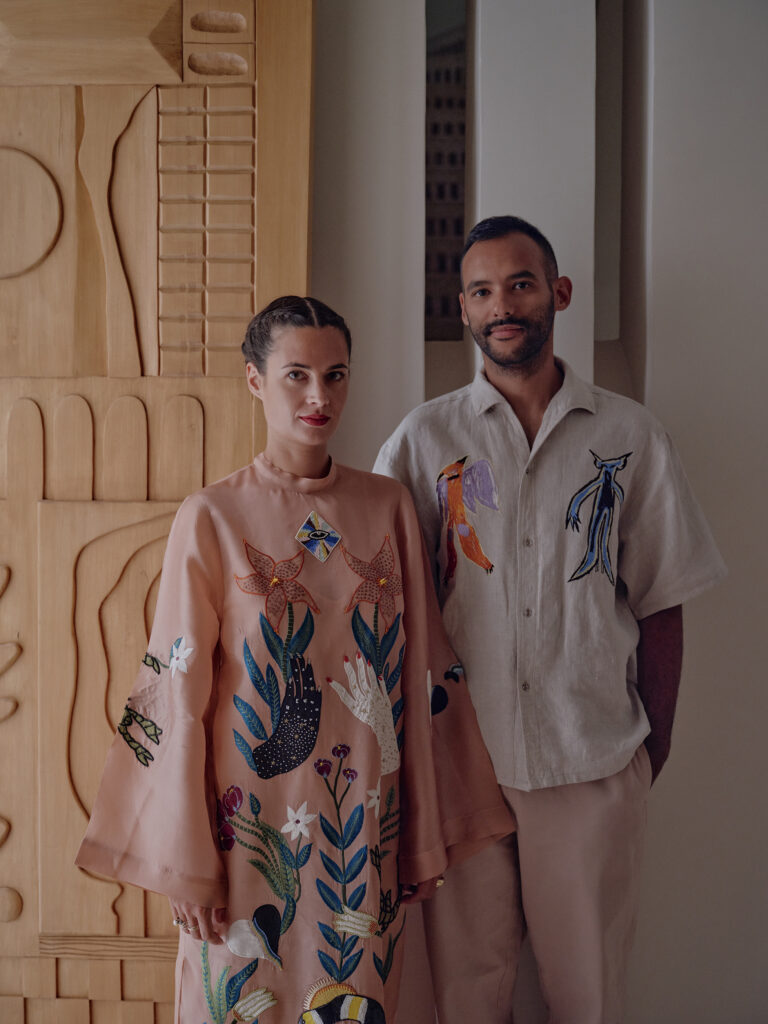 Image by Marina Denisova
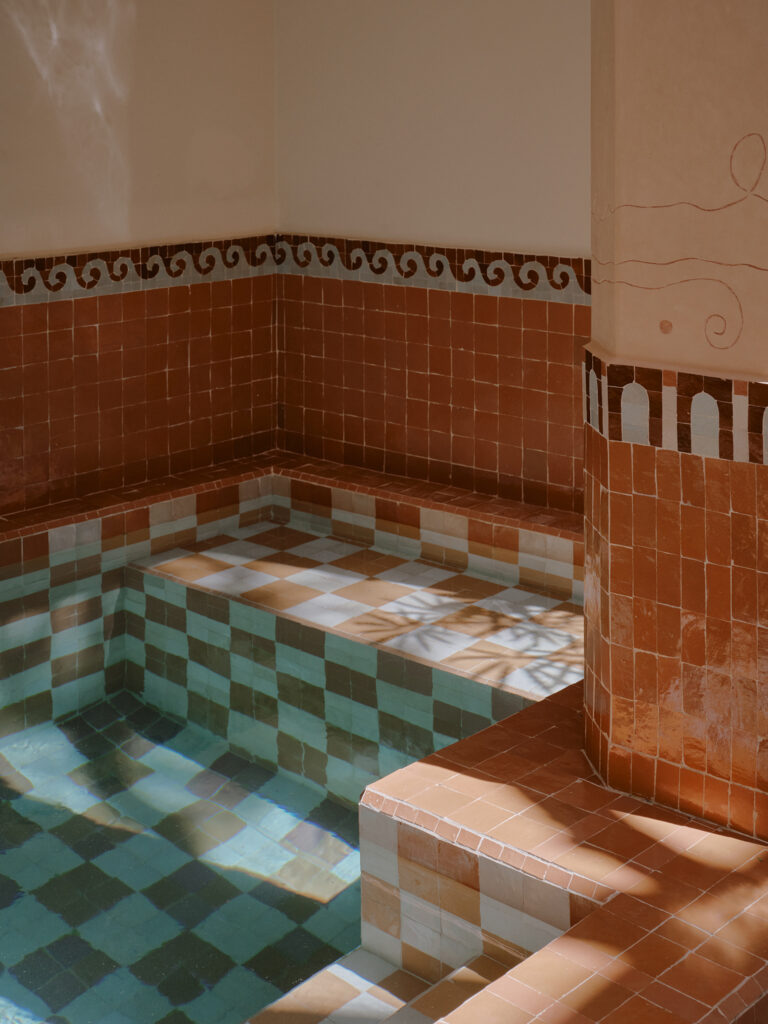 Image by Marina Denisova
The house was designed by Quentin Wilbaux, the Belgian architect and historian who made a life’s work of recording the medina’s houses and restoring nearly 150 of them. For years it was a family home, and Leenaert and Boualam bought it in early 2021. Its new name is a double tribute: to Rose-Marie, the former owner, and to the herb, which recurs throughout the house, from the scents made for it to the planting in the courtyard.
The care that went into the restoration shows everywhere. Some twenty master craftsmen and women brought the house to life, many of them found on long journeys across the country: stained-glass makers in Meknes, potters in Safi, zellige tile-makers in Fes, marble merchants in Rabat. Others — the carpenters, metalworkers and plasterers — live nearby. One local team hand-poured the courtyard’s terrazzo tiles at a rate of thirty a day. Another set eight thousand pieces of red marble into lozenge patterns on the main staircase.
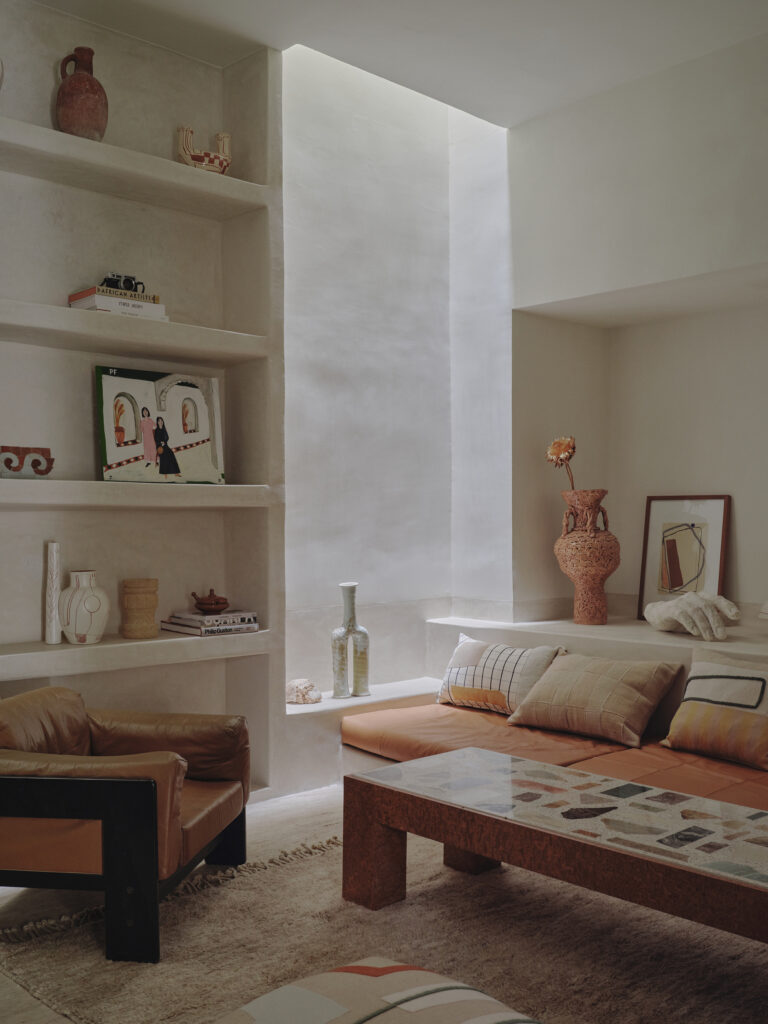 Image by Marina Denisova
While the building work went on, Leenaert made pieces for the house: a cedarwood sideboard for the Rosemary Suite, sinuous wrought-iron door handles, hand-painted bathroom tiles, and sculptural planters in sandstone, a material she had never worked with before. Her paintings hang throughout, alongside works by artist friends from her own collection.
The rest came from years of collecting: vintage Scarpa armchairs, 1920s writing desks, American Fanimation ceiling fans, and Beldi glass tumblers modelled on antique whisky glasses. There is humour in the details, too. An octopus motif and angular relief plasterwork turn up in almost every corner.On the roof terrace, a wedding chair of Leenaert’s own design sits in the shade of a forty-year-old jacaranda that rises from the courtyard below. Even the arrival is part of the design: guests are collected from the airport in a vintage Mercedes grand taxi, a relic of Marrakech’s golden age.
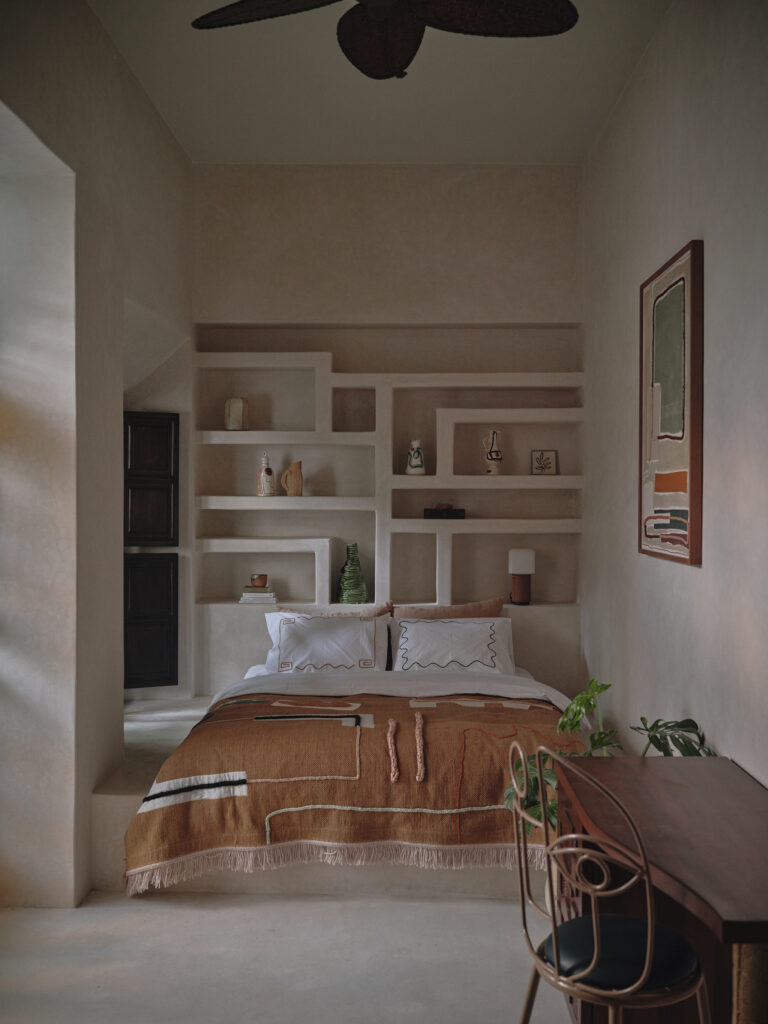
Beyond the room
The couple have also built a programme that goes further than the usual cooking classes and language lessons, though both are on offer. Guests can blend their own soaps and hammam scrubs from herbs, spices and flowers bought in the nearby Mellah, or join tablescaping and craft classes taught by Leenaert herself: a way into the stories behind the objects around them.
Many of those objects can go home with them. Much of the art and decor is for sale, from the vintage armchairs and statement lamps to LRNCE linens, stationery and scented toiletries, and even original artworks such as The Sea View, which hangs in the Bird Nest Suite.
The basics
The whole house can be booked for house parties of up to ten guests or cocktail parties of up to forty, as well as for photo shoots and brand events. The riad is about fifteen minutes from Marrakech airport, and private transfers can be arranged on request.
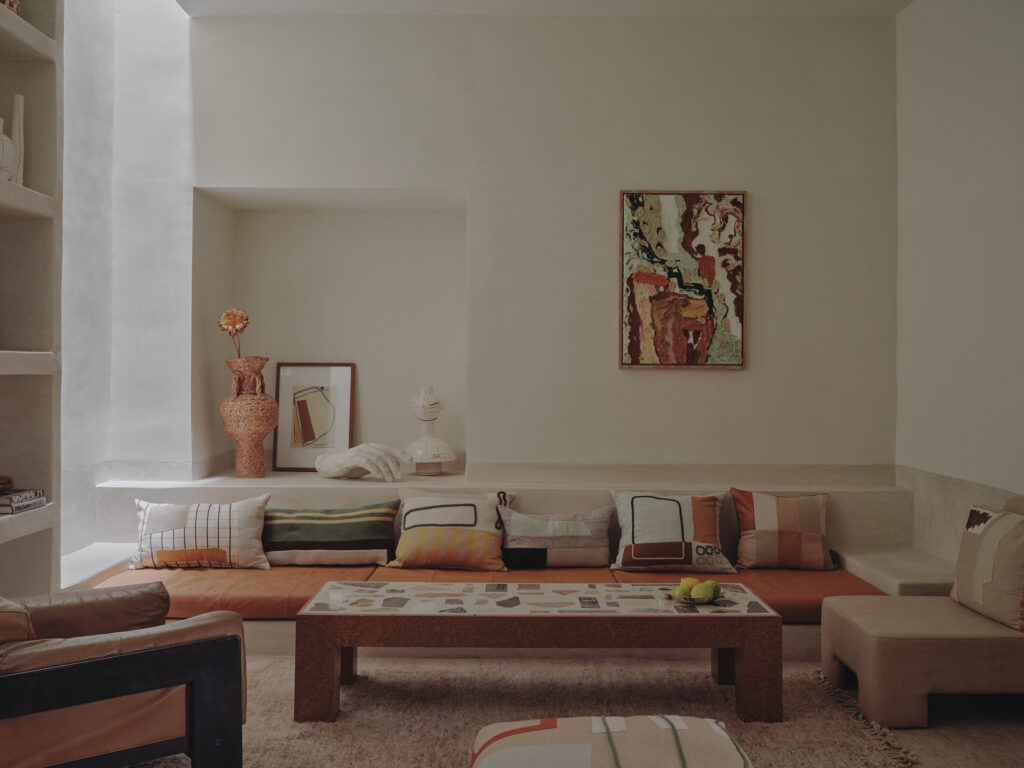 Image by Marina Denisova