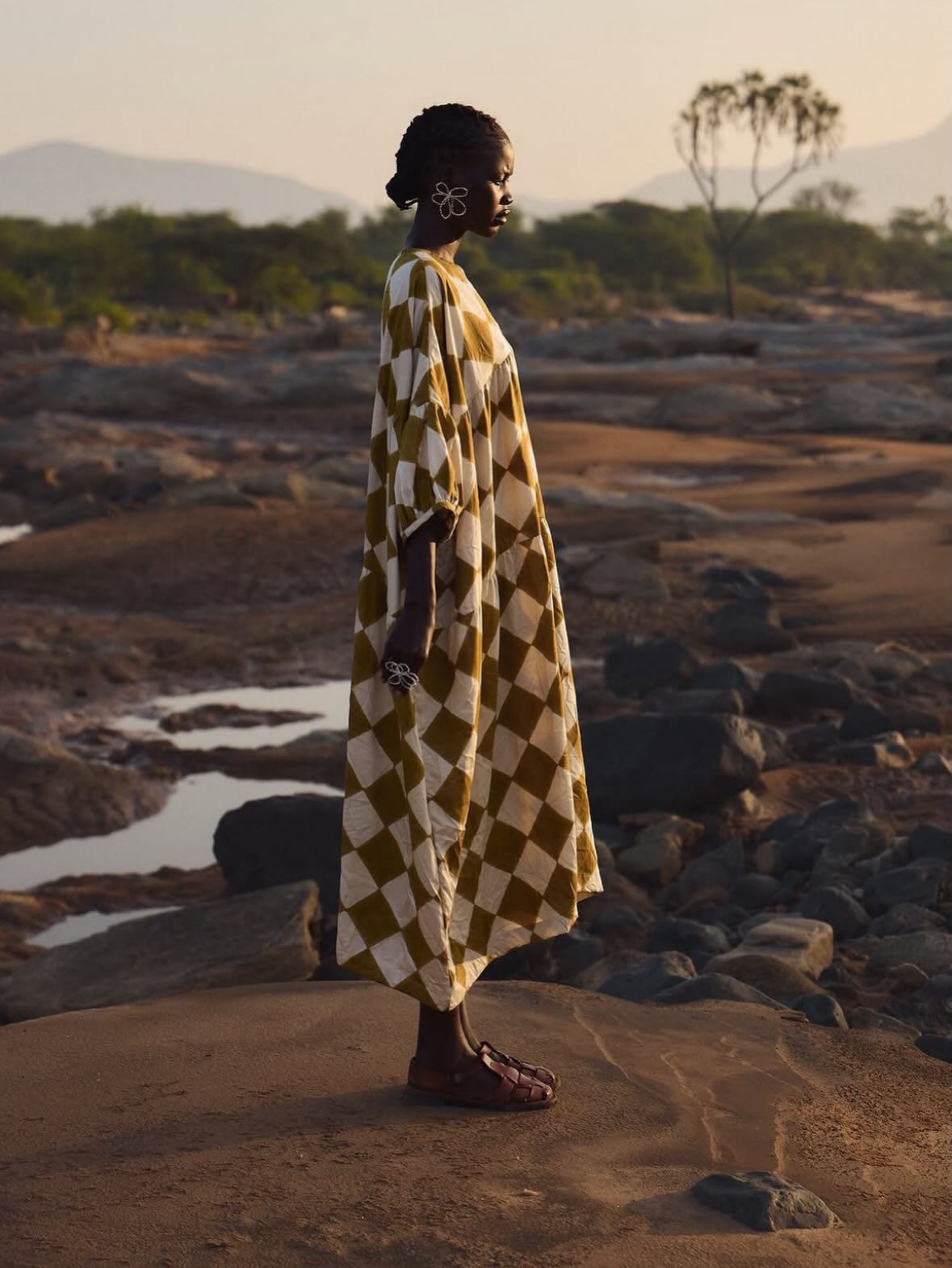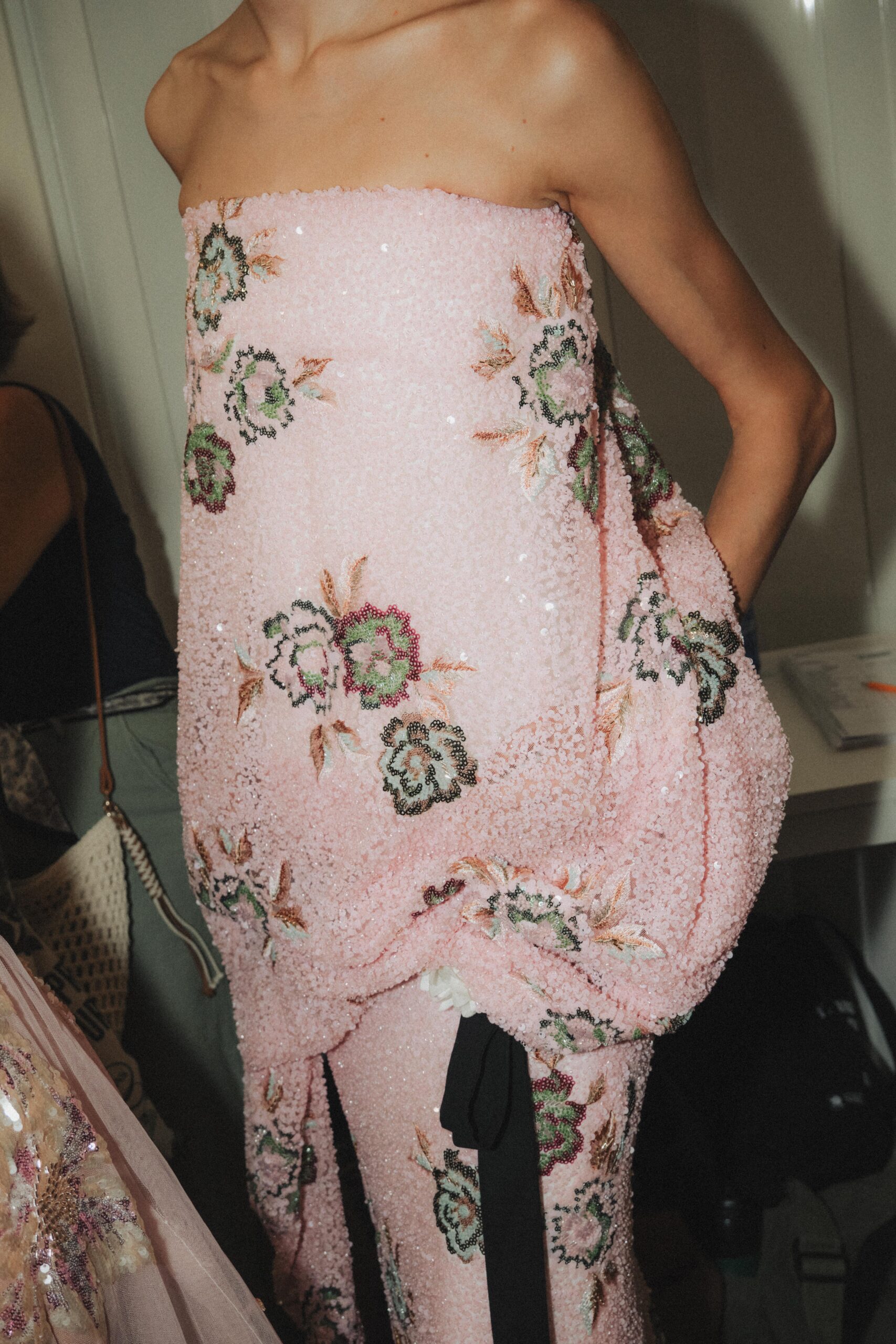
Last month, Mercedes-Benz Fashion Week Madrid took over the Spanish capital for six days and made one thing clear: Madrid is no longer waiting for the world’s attention. It is claiming it. The week brought designers such as Palomo Spain, which celebrated ten years on the runway this season. Alejandro Gómez Palomo has turned the romance, drama and craftsmanship of his native Andalusia into a language the whole world recognises, and made unapologetic beauty feel radical again. Alongside him, Juan Vidal, a master of colour and print, continues to prove that Spanish femininity can be sensual, precise and entirely modern.
 Juan Vidal. Photo: Framae Studio
 Palomo. Photo: Framae Studio
Behind the week’s vision stands Valentina Suárez-Zuloaga, who does not talk about fashion the way most creative directors do. Trained in London in sociology and communications, with a specialisation in consumer behaviour, strategy and e-commerce, she reads the industry as a system of culture, commerce and people as much as a succession of collections. That perspective shaped Es Fascinante, the digital platform she co-founded to champion Spanish slow fashion, which now represents and sells more than 100 independent brands. Today it shapes her work at MBFWMadrid, where she leads the strategic vision and positioning of Spain’s foremost fashion week. Her proposition is disarmingly simple. Madrid lacks the decades-long runway tradition of Paris, Milan or London, and that, she argues, is not its weakness but its greatest advantage.
We sat down with Suárez-Zuloaga to talk about the city she is determined to put on the international fashion map, and everything that comes with that ambition: identity and craftsmanship, the price of spectacle, the misconceptions that still follow Spanish fashion abroad, and what it takes to change something that has existed for decades. The result was a conversation as candid as it was clear-eyed, with a woman who knows exactly why she does what she does.
 Valentina Suárez-Zuloaga. Photo: Framae Studio
Madrid has an energy that is entirely its own. What sets its fashion scene apart from Europe’s other fashion capitals?
For me, one of the most interesting things about Madrid is that it doesn’t have the long-standing tradition of fashion presentation that Paris, Milan or London have, and I actually think that is part of its strength. There is something fresher, more spontaneous and less predictable about Madrid. What we do have is an enormous amount of creativity, talent and cultural energy. What is changing now is the way that creativity is projected: with greater ambition, professionalism and an increasingly international perspective. That is what makes the city so exciting. There is no need to recreate another fashion capital. Madrid has the opportunity to build its own.
What do Spanish designers understand particularly well about identity, craftsmanship and culture?
Spanish designers understand that identity does not have to mean looking backwards. We have an extraordinary heritage of craftsmanship, but the most interesting designers reinterpret it rather than simply reproduce it. They bring a new perspective to it. There is also something very emotional about Spanish fashion. We understand colour, movement, sensuality and the importance of the body. And perhaps because Spain has such a diverse cultural landscape, there is no single definition of “Spanishness”. There are many.
 Orra. Photo: Framae Studio
How open is MBFWMadrid to international designers today? Is there a place for talent from around the world, or does it remain primarily a stage for Spanish fashion?
MBFWMadrid is fundamentally a platform for Spanish fashion. However, our vision is to make Madrid a meeting point between the Hispanic world and the rest of the globe. We want international designers, buyers, press, creatives and institutions to feel that Madrid is a place where they can participate, collaborate and build relationships. We are particularly interested in building bridges with regions that share cultural or commercial ties with Spain: Latin America, the Middle East and, increasingly, other international markets.
Could Madrid become a real platform for young international designers looking for an alternative to Paris, Milan or London?
Absolutely. Madrid’s strength is precisely that it offers something different: a city with a very strong cultural identity, extraordinary hospitality, a sophisticated way of life and a fashion ecosystem that is becoming increasingly international. Madrid as a whole is fascinating, safe, creative and vibrant. That is where the real opportunity lies. And, of course, there are the blue skies. [Laughs]
What needs to change for MBFWMadrid to secure a stronger position on the international fashion map?
We need to think beyond the fashion week itself. International relevance comes from the ecosystem around it: the quality of the designers, the buyers and press who attend, the business opportunities created, the international partnerships, the city, the cultural programme and the narrative we build around Spain. We also need to be more ambitious about our own identity. Spain is an extraordinary country, but we have never been particularly good at selling ourselves, at communicating what we are, what we have to offer, and the incredible value and talent that exist here.
Was there a designer, a collection or a moment during this season’s MBFWMadrid that truly surprised you?
What surprises me most is how different the creative languages can be within the same ecosystem. For me, the most exciting moments are not necessarily the biggest shows. They are the moments when a designer has found a very clear point of view, when you immediately understand that what you are seeing could only have come from that person. That is what I look for: coherence, consistency and authorship.
 Yolancris. Photo: Framae Studio
 Simorra. Photo: Framae Studio
Fashion weeks have increasingly become a spectacle of celebrities, social media, street style and front rows. What is lost when the industry becomes too focused on the show around the show?
The product. Fashion is a cultural industry, but it is still about design and great product. When the spectacle becomes the story, we risk forgetting the hours of work, the craftsmanship, the construction and the creative thinking behind a collection. At MBFWMadrid, I want the experience to be memorable, but it should amplify the designer, never replace them.
Designers everywhere now draw on the same references through the internet. How can a young designer develop a personal language without becoming another version of something we have already seen?
By looking beyond fashion. If you only look at other designers, your references eventually become circular. Young designers need to look at architecture, cinema, literature, art, music and history, at their own family, their own city, even their own memories and culture. Technology gives us access to everything. The challenge now is having something personal to say. I think that is why craftsmanship matters so much. Making something with your hands creates a relationship with an object that AI, or any other technology, cannot replicate.
What is the biggest misconception people outside Spain have about Spanish fashion?
That Spanish fashion is either traditional or commercial. Spain has both, of course, but underneath there is a far more sophisticated and diverse creative landscape. We have designers working at a very high level of craftsmanship, emerging talents experimenting with new materials, exceptionally strong accessory and leather traditions, and brands with genuine international potential. I think the world is only beginning to understand the depth of Spanish fashion.
Sustainability has become almost unavoidable in fashion conversations. Is the industry really changing, or have we simply become better at talking about change?
I have my doubts here. I think there is genuine change, but a lot of the language around sustainability has become part of the marketing vocabulary. For me, the interesting question is not whether a brand calls itself sustainable. It is whether it is making better decisions: producing less, producing better, producing locally, respecting materials and people, investing in longevity and understanding the real value of what it creates.
 Valentina Suárez-Zuloaga. Photo: Framae Studio
Every creative career comes with moments of doubt, failure and difficulty. What has been one of your biggest challenges, and what did it teach you?
One of the biggest challenges has been learning to make decisions when there is no obvious answer, particularly when you are trying to change something that has existed for decades. When you have a vision, there will always be people who prefer the way things were. I have learned that leadership is not about having everyone agree with you. It is about knowing why you are doing something and being willing to take responsibility for it. It has also taught me to listen without losing my point of view.
If you could change one thing about the fashion industry today, what would it be?
I would bring back a stronger sense of local value and local production. Quality over quantity. We live in a culture of constant novelty: more collections, more content, more products, more noise. Fashion needs to recover the idea that something can be valuable because it is well made, meaningful and built to last. Less noise. More substance.
And when people leave MBFWMadrid, what would you like them to take away?
I want people to leave feeling that Madrid is a city they need to pay attention to. That Spanish fashion is ambitious, contemporary and international. That there is extraordinary talent here, but also a culture, a way of living and a creative energy that cannot be replicated anywhere else. Ultimately, I want MBFWMadrid to be more than a fashion week. I want it to be a true platform for economic growth, a window into contemporary Spain and a bridge between Spain and the rest of the world.