Words by Avishag Elkayam
Some furniture is designed to disappear quietly into a room. Josh Page Studio seems far more interested in what happens when it refuses to. From chairs shaped by Cubist geometry to shelves sprouting wooden thorns, the Kent-based studio creates pieces that sit somewhere between functional furniture and sculpture: made to be used, but equally made to be noticed.
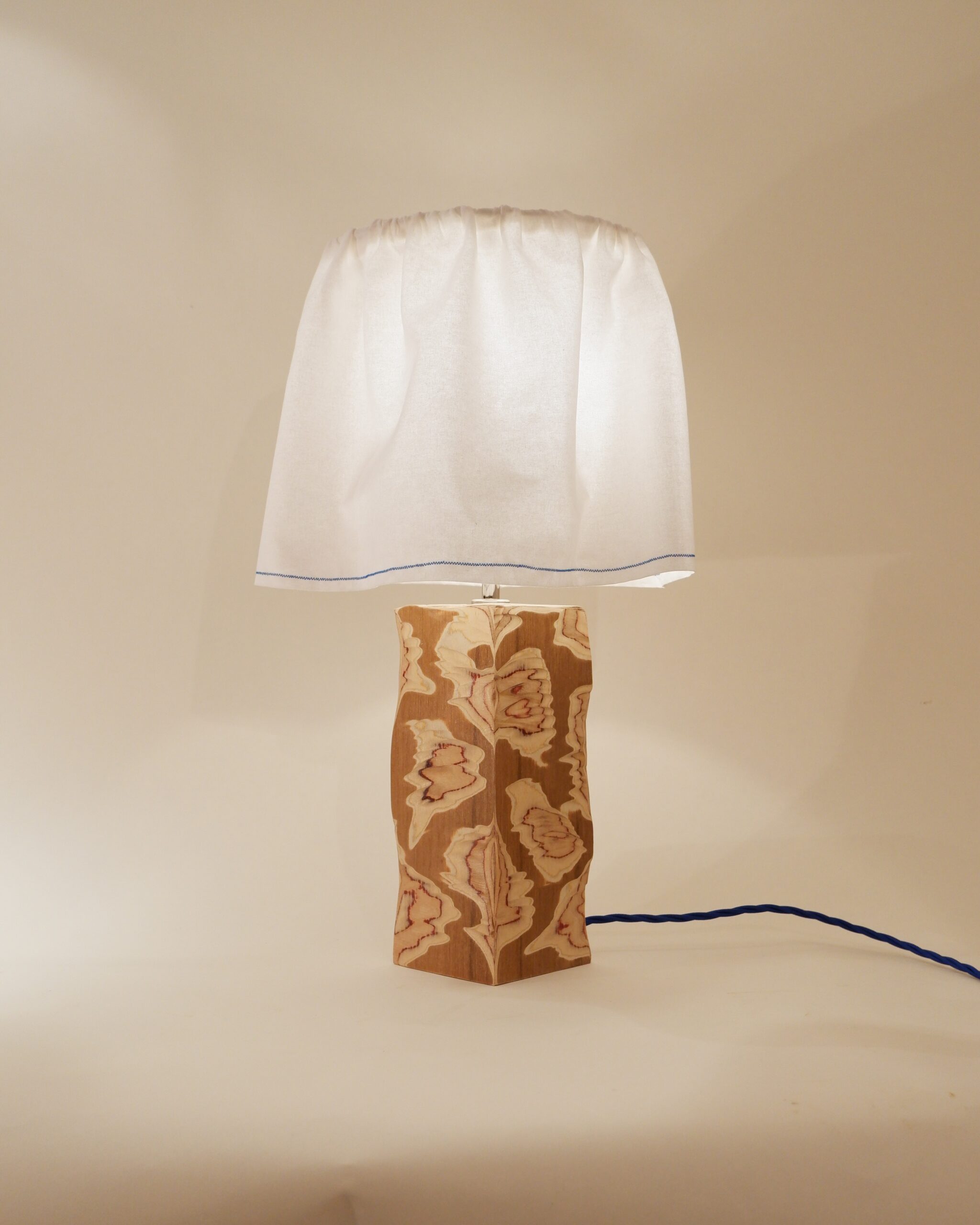
 Acid Table Lamp
Behind the studio is Josh Page, a woodworker with a background in fine art and a previous career as a framer at the National Gallery in London. It is a history that makes the studio’s particular language feel almost inevitable. Page approaches furniture through both craftsmanship and art history, drawing especially on artists such as Pablo Picasso and Georges Braque.
The studio grew out of that intersection. Early pieces such as the Picasso Chair, the Cubist Bookends, and the Apple Chair translate artistic references into domestic objects, borrowing the geometry and playfulness of modern art without turning furniture into something untouchable. Instead, Page brings some of that artistic freedom into everyday life.
 Josh Page
 The Picasso Chair
Josh Page Studio creates furniture and objects inspired by artworks and sculpture, each piece handmade in the family workshop in Kent. The catalog moves between seating, lighting, mirrors, storage, and smaller homewares, with designs that often seem as though they could sit just as comfortably in a gallery as in a home.
There is humor throughout, but never at the expense of craft. Forms can be exaggerated, irregular, or unexpected, while the material remains central. Wood is not simply the substance an idea is built from; it becomes part of the visual language itself. That relationship is particularly visible in two of the studio’s newest bodies of work, Thorn and Acid.
 Thorn Stools
The Thorn collection takes as its starting point one of nature’s more contradictory forms: the rose bush, at once beautiful and hostile. In the Thorn Shelf, a clean timber surface is interrupted by turned wooden thorns, transforming a familiar household object into something unexpectedly sculptural.
Handmade from sapele, the shelf appears to float against the wall, while its spikes give an otherwise simple form a strange tension. The object remains entirely recognizable, but something has shifted. Nature has been translated into timber, then exaggerated just enough to make the familiar feel unfamiliar again.
The Acid collection pushes the studio’s exploration of timber further through texture. Wood surfaces are carved into irregular, almost liquid patterns, allowing grain, layers, and contrasting tones to become part of the composition.
The Acid Lounge Chair combines carved, textured panels with ash surrounds, balancing a bold sculptural profile with its practical role as seating. The Acid Chest of Drawers carries the idea into storage, pairing walnut with ash and walnut-veneered plywood to create the collection’s distinctive carved surface. The result feels tactile and expressive, a reminder that timber does not need to be polished into visual silence to feel refined.
 The Acid Chest of Drawers
That respect for material extends beyond aesthetics. Josh Page Studio sources local materials wherever possible and makes its Off Cut Objects from reclaimed timber. Rather than starting with a fixed design, Page lets the shape and character of each leftover piece influence what it becomes, resulting in one-off objects shaped partly by the material itself.
Handmade production, made-to-order furniture, and bespoke commissions all reinforce the same approach. Instead of treating variation as something to eliminate, the studio makes individuality part of the object.
What makes Josh Page Studio compelling is its refusal to choose between sculpture and utility. A chair can reference Picasso and still be a chair. A shelf can grow thorns and still hold your things. A chest of drawers can command a room without surrendering its everyday purpose.
In Page’s hands, wood becomes a medium for experimentation, humor, and art history, without ever losing its own identity. The result is furniture that feels like art but never becomes too precious to live with.
 Brancusi Mirror