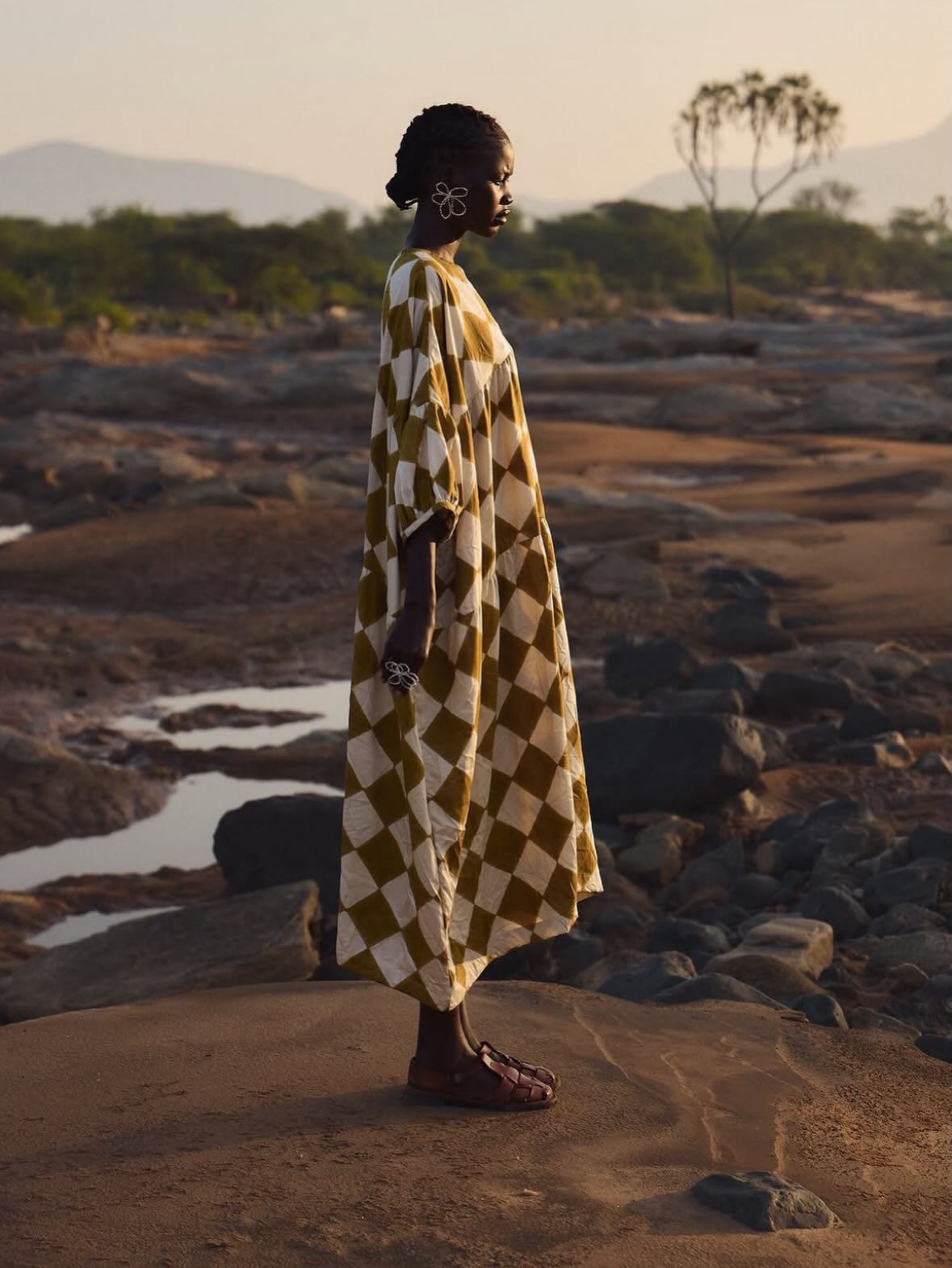
Lunch was served at Domaine de Primard, in the Normandy countryside, at a single long table. It was there, rather than on a runway, that Moismont presented this autumn’s collaboration with the Paris label Ysé: soft knits, short skirts, printed bodysuits and a generous quilted bag in checks, cut for walking through an orchard as the weather turns. The setting was no accident. Moismont was named after a house, and it has never stopped dressing for the fields around it.
 Photo by Lottie Hampson
 Photo by Lottie Hampson
The house stands in Picardy, red brick banded with pale stone under tall chimneys, its garden of wild grasses gone gold at the tips. It has passed from one generation of the family to the next, and its year still turns on the orchard: apples in autumn, jam in summer, boots by the door for most of the months between. When Martine founded the brand, she gave it the house’s name, and with it a brief. Apples and fresh rain. The warmth of brick and the quiet of open country. A parka and something wrapped around the neck on winter mornings among the fruit trees; a light square over the shoulders on summer evenings by the sea. The palette has never strayed far from it: earth, sky, apple, wood.
 Photo by Lottie Hampson
 Photo by Lottie Hampson
The clothes, however, are made some 8,000 kilometres east, in the weaving, printing and dyeing workshops of Bengal, which Moismont regards as a second heritage. Picardy supplies the rain and the brick; Bengal, saturated colour and the smell of spice. The brand speaks of the relationship not as sourcing but as a long exchange between two textile cultures, built on trust and on the conviction that the hand belongs at the centre of the work.
That conviction is visible in the cloth. On a handloom, the weaver sets the heddles by hand and guides every pass of the shuttle, and the slight irregularities that result are kept as a mark of authorship. On a powerloom, a weaver stands beside the machine, correcting the smallest drift in the threads. Block printers stamp each motif by hand with carved teak blocks, sometimes several to a design; screen printers align one frame per colour by eye. In the dye yards, cloth is lowered by hand from bath to bath, heat and timing judged by the artisan, then hung to dry in the open air. Shibori and dip-dye pieces are folded, bound or clamped with wood to resist the dye, so no two come out alike. None of it is quick, and Moismont has no intention of making it so.
 Photo by Lottie Hampson
 Photo by Lottie Hampson
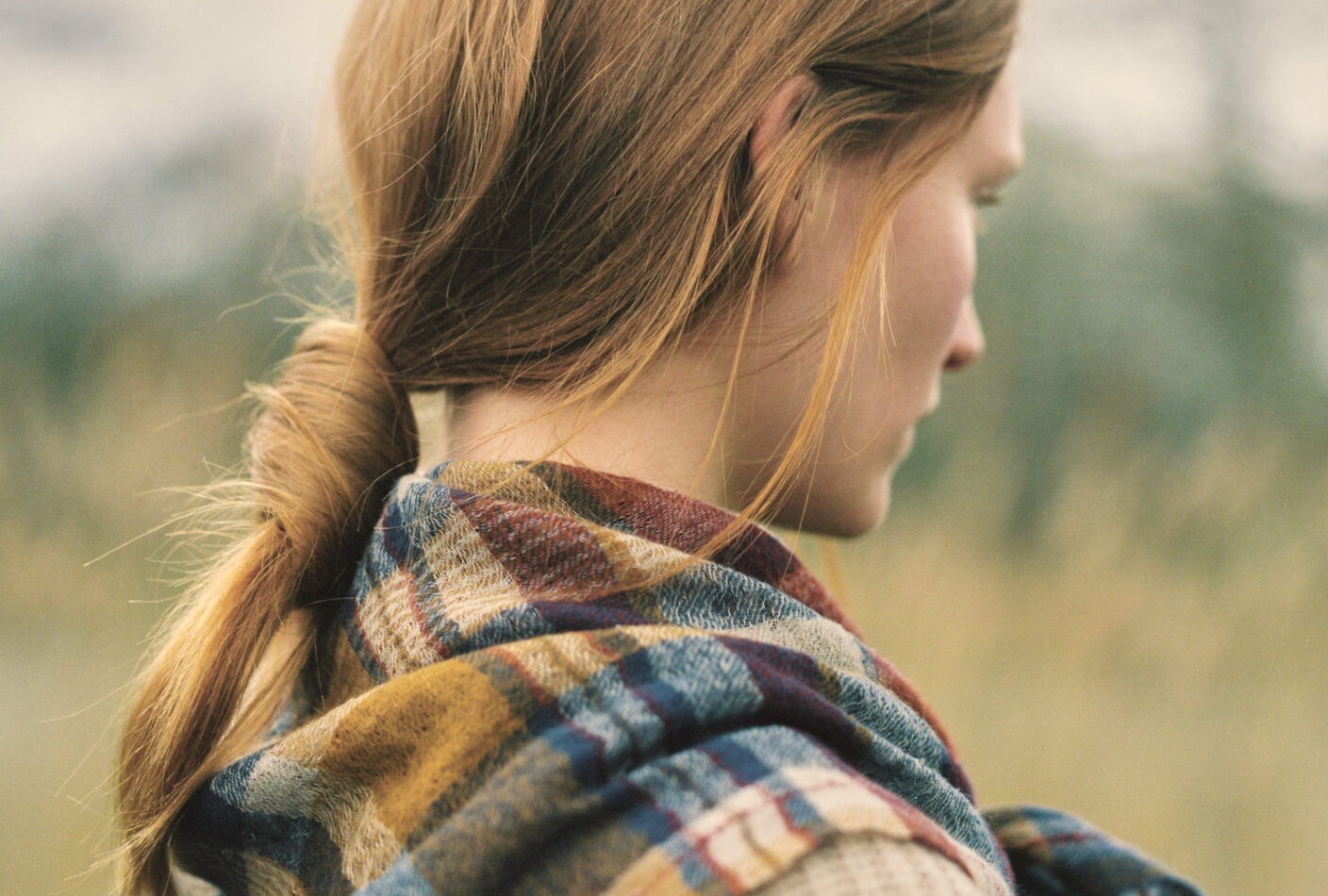
Each pattern begins in watercolour, at the table of Adrien Testard, who creates the brand’s prints. He lets colours bleed and forms soften until the paintings become repeats, then palettes, then cloth. Fashion, art and travel all feed in, but his steadiest source is the land itself: a wide horizon, light that shifts with the season. His sketchbooks pair stacked vessels in violet ink with columns of pinned wool in moss green, oxblood, mustard and a blue just short of navy. Turn a few pages and the scarf is already there.
It was a scarf that started everything, and the scarf remains the signature, now in cotton, wool, cashmere and silk: a tender way of carrying home around one’s neck. Since then the brand has grown the way family homes do, a room at a time, adding cardigans, printed shirts and jackets, beanies and knitted balaclavas, totes and weekend bags, throws and cushions in orchard colours. Each tells the same story in a different material, and each is meant to be used, cared for and handed on. Series stay small and materials natural, which Moismont presents less as a sustainability programme than as common sense: the most honest form of responsibility is an object that lasts.
 Photo by Lottie Hampson
 Jacques & Martine
The house in Picardy now has a Paris address as well. Martine’s son, Jacques, runs Moismont from an office in the 17th arrondissement, without letting it outgrow its human scale. Some customers have bought from the first season, and relationships with suppliers and stockists are counted in years, not orders. The family describes what binds them as respect for slow textile traditions, an openness to cultural exchange, and something it calls clan: a loyalty that runs both ways, a circle that widens without losing its centre. Seen that way, the lunch at Primard, with another label invited to the table, was less a launch than the family growing.
 Ysé x Moismont collection by Augusta Sagnelli
 Ysé x Moismont at Domaine de Primard by Augusta Sagnelli
Moismont likes to say that wearing its pieces intertwines your life with the dreams of the weavers. It sounds sentimental until you hold the cloth and trace its route: a watercolour painted in France, cut into teak or stretched onto a screen, dyed and dried under a Bengal sky, then sent back north to become a scarf, a cardigan, a throw over a chair. The house never leaves Picardy. Every piece takes a little of it along.